Besan (gram flour)
बेसनبیسن
besan
Flour ground from chana dal (split Bengal gram), sold as besan, gram flour or chickpea flour.
Its job: Nutty flavor, golden color and extra protein.
Also called Besan Roti · Dal Paratha · मिस्सी रोटी · مسی روٹی
A soft, nutty Punjabi flatbread made from besan and whole wheat atta, kneaded with onion, green chili, ajwain, kasuri methi and spices, cooked on a hot tawa and finished with ghee or butter.
Missi roti is a Punjabi flatbread made with besan and whole-wheat atta, spiced with ajwain, onion, chili and herbs. Each roti has about 5 g of protein and 3 g of fiber, more than plain roti.
 From the MedRise Food Science kitchenPublished
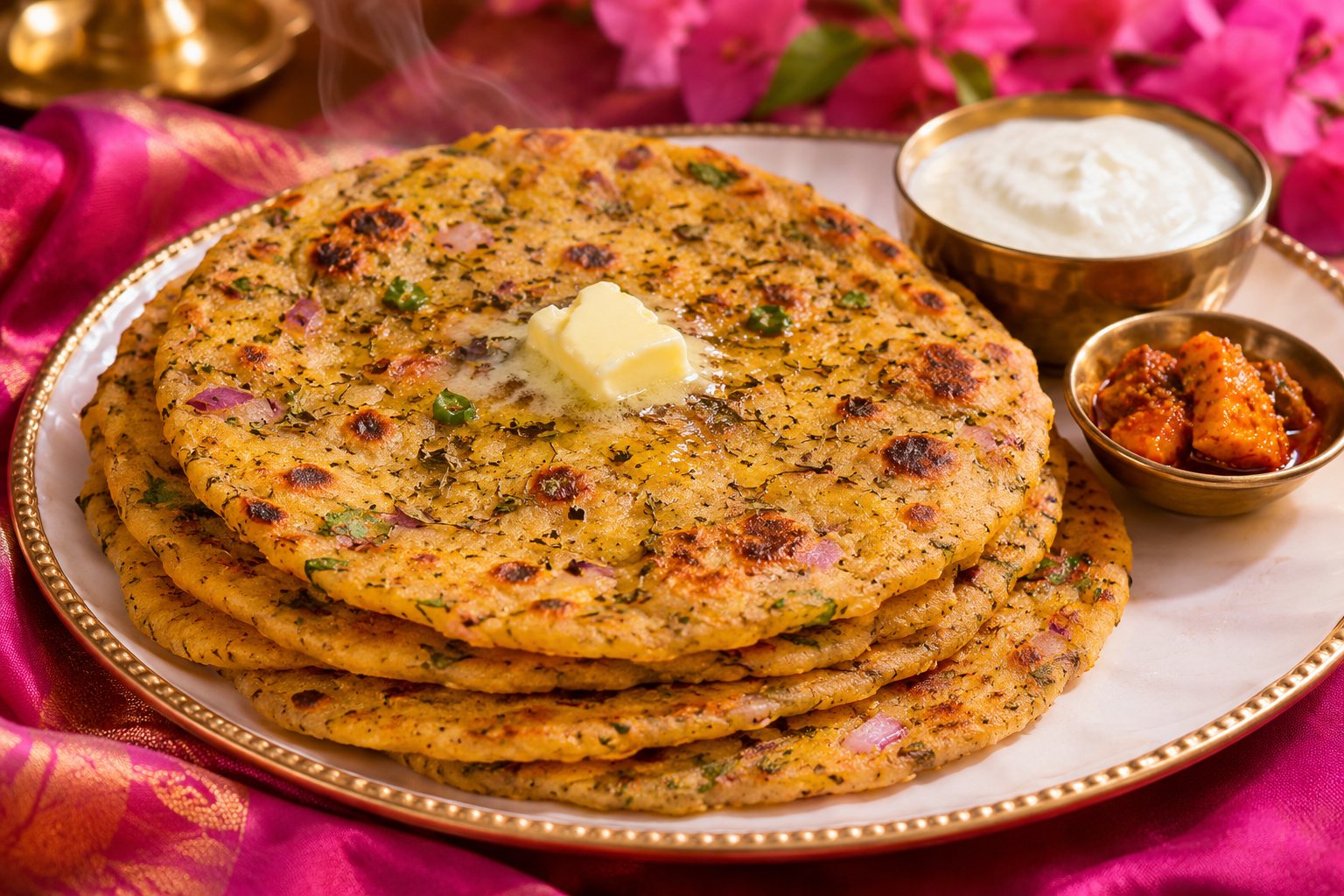
Missi roti is a Punjabi flatbread made by mixing besan (gram flour) with whole wheat atta and kneading in onion, green chilies and spices. “Missi” comes from the Punjabi for “mixed,” after the blend of flours.
Besan is simply chana dal ground into flour, which is why many Punjabi families call missi roti dal paratha. It’s classic with a dab of white butter, a bowl of dahi and some aam ka achaar.
The main ingredients, with their English, Hindi and Urdu names.
Flour ground from chana dal (split Bengal gram), sold as besan, gram flour or chickpea flour.
Finely ground Indian whole wheat flour, sold as “atta” (chapati flour).
Tiny seeds with a strong thyme-like aroma.
Dried fenugreek leaves.
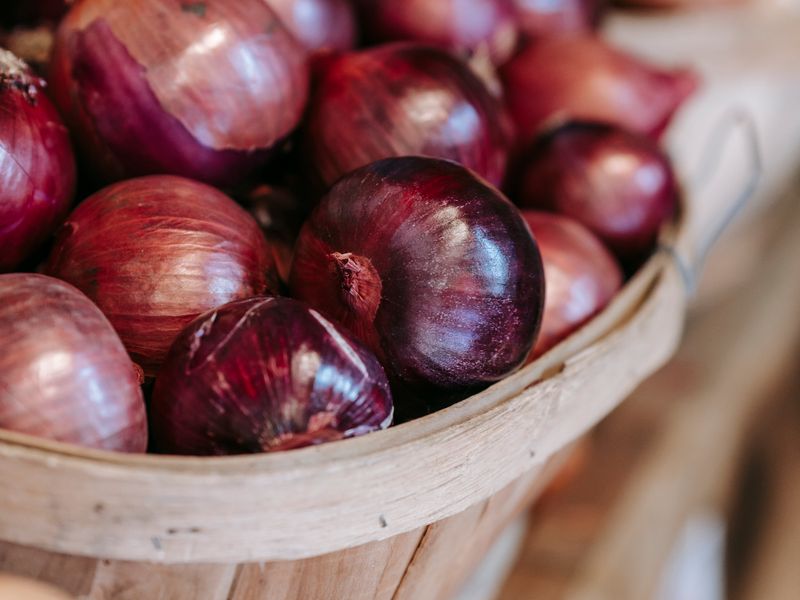
Very finely chopped.
Finely chopped.
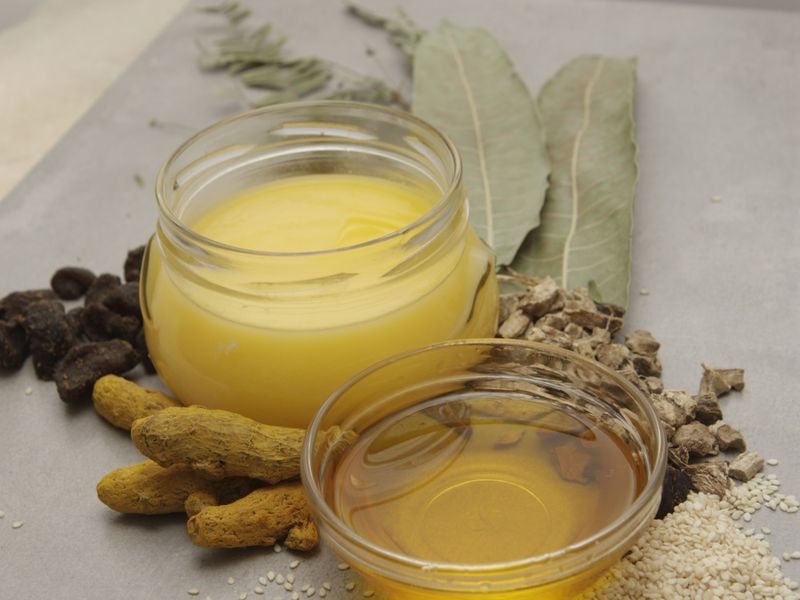
For the dough and for brushing.
Grow it yourself: Green chilies, Cilantro (dhania), Methi (fenugreek)
Restaurant cooks do these things by habit. Here’s what each step is actually doing to the food, so you can cook by understanding instead of guesswork.
Mix equal parts besan and atta.
Besan comes from chickpeas, which have no gluten, so a dough of besan alone cracks and crumbles when rolled. Wheat atta supplies gluten, the stretchy protein network that lets the dough roll thin and hold together. Half and half keeps the besan flavor while rolling easily.
Mix in the onion first, then add water a little at a time.
Onions release water as they’re kneaded, and besan absorbs liquid differently from wheat. Adding water gradually avoids a sticky dough; it should be soft but not tacky.
Rub a spoonful of ghee into the flour.
Fat coats some of the flour particles and limits how much gluten forms, which keeps the roti tender instead of tough. It’s the same idea as shortening in pastry.
Rest the dough, covered, for 15 minutes.
Resting lets the flours finish absorbing water and lets the gluten relax, so the dough rolls out without shrinking back.
Cook on a hot tawa over medium-high heat.
Besan browns faster than wheat because it has more protein and natural sugars, which feed the Maillard reaction. Medium-high heat cooks the inside before the outside scorches; lower the heat if brown spots appear too fast.
Crush the ajwain lightly between your palms.
Ajwain gets its distinctive thyme-like smell from thymol. Crushing releases it into the dough.
Exact amounts and timings are in the recipe card below.
What this dish brings to the table, with an honest rating of how strong the evidence is.
3.3 g protein per 100 calories. Estimated from the ingredients with USDA FoodData Central values.
Gym-friendly tip: Pair with a protein: ¾ cup Greek yogurt dip (about +16 g) or a boiled egg on the side (+6 g each).
Besan (chickpea flour) roughly doubles the protein of wheat flour. Each roti has about 4–5 g of protein and 3 g of fiber (estimated).
Whole wheat atta counts toward the whole grains the Dietary Guidelines recommend.
Besan is ground chana dal, so missi roti carries some of the benefits of pulses into your bread.
General nutrition information, not medical advice. Numbers marked “estimated” are calculated from the recipe’s ingredients and vary with brands and portions. If you have diabetes, heart or kidney disease, a food allergy, or are pregnant, ask your doctor or a registered dietitian how this dish fits your diet.
Fits these health goals: Type 2 diabetes and prediabetes, Constipation and gut health, Acid reflux (GERD), PCOS (polycystic ovary syndrome) (general guidance, not medical advice)
Health sources: Harvard T.H. Chan School of Public Health: Legumes and pulses · Dietary Guidelines for Americans
See the full ingredient health guide: benefits, traditional roots and the science →
No, it’s made with whole-wheat atta as well as besan. For gluten-free, make a besan chilla instead.
About 150 calories per roti brushed with ghee (estimated).
Besan is ground chana dal, so many Punjabi families call missi roti dal paratha. A stuffed chana dal paratha is a different dish with the same idea.
Not with this method: the atta’s gluten is what lets it roll. All-besan rotis need to be patted thicker and handled gently.
The dough was too dry or not rested. Add a teaspoon more water and rest it longer.
Desi restaurant favorites, recreated at home and explained with food science: every recipe is tested in a home kitchen and comes with the why behind each step.
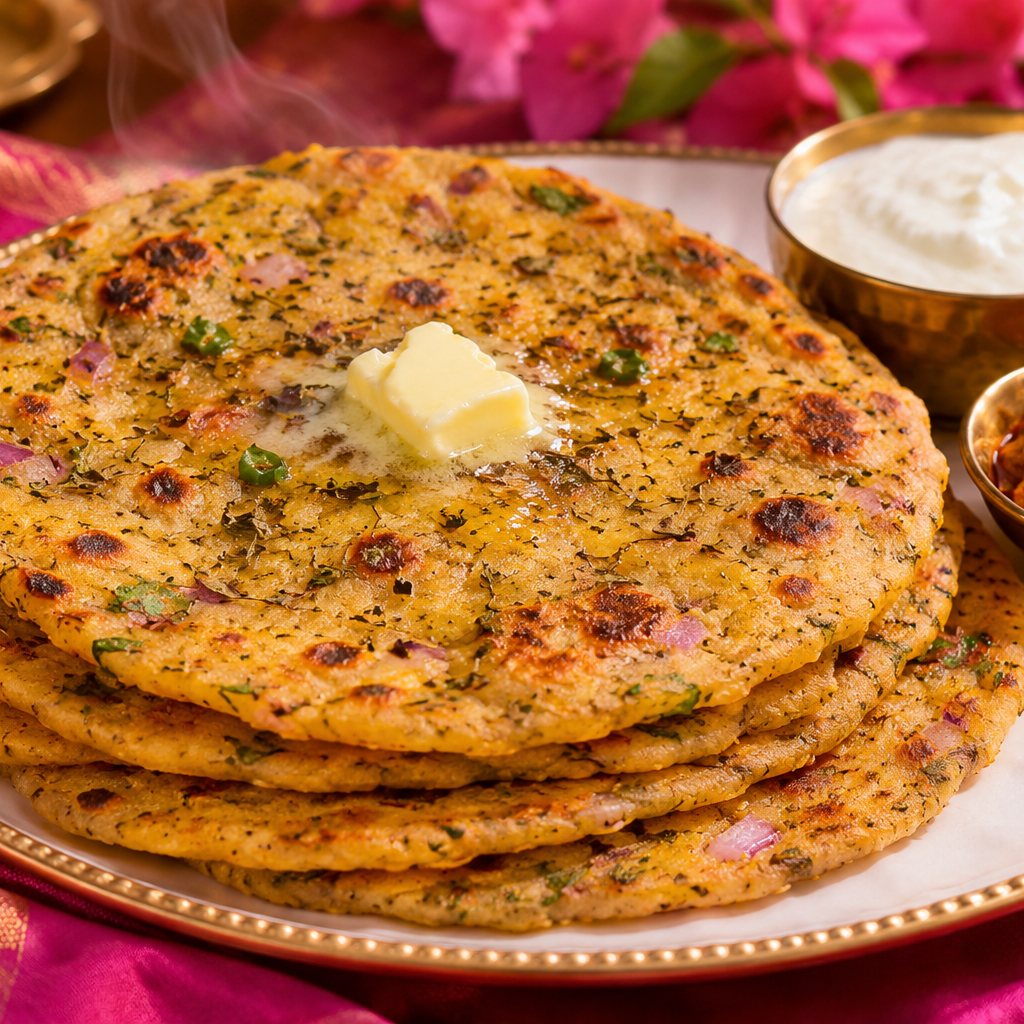
Punjabi missi roti, also called dal paratha: besan (ground chana dal) and whole wheat atta kneaded with onion, green chili, ajwain, kasuri methi and spices, cooked on a hot tawa with ghee. With the science of mixing a gluten-free flour with wheat.
How much to make, based on 4 people eating it once a day. One batch of this recipe makes 8 roti.
Why only a few days in the fridge? Refrigeration slows bacteria but doesn’t stop them; some, like Listeria, can still grow at fridge temperatures, which is why food-safety agencies set cooked leftovers at 3–4 days. Freezing at 0°F stops growth completely, so frozen portions stay safe indefinitely; the freezer times above are for best taste and texture.
Food-safety guidance: USDA, Leftovers and Food Safety · FoodSafety.gov storage chart