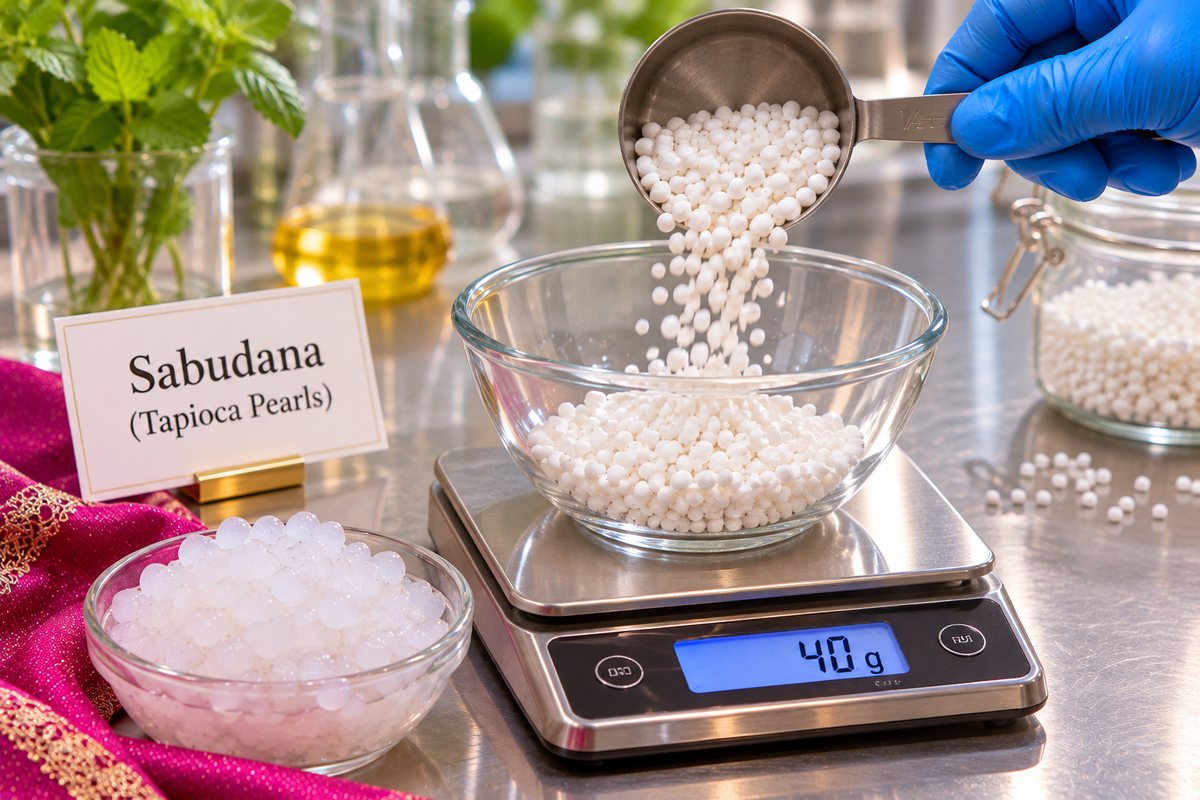
Sabudana (tapioca pearls)
साबूदानाساگودانہ
sābūdānā
Medium pearls, not the tiny or giant kind.
Its job: The base.
Also called Sago Khichdi · Sabudana Upvas · साबूदाना खिचड़ी · ساگودانہ کھچڑی
Soft tapioca pearls tossed with roasted peanuts, potato, cumin, green chili and lemon, the go-to dish for vrat days.
Sabudana khichdi is soaked tapioca pearls tossed with peanuts, potato, cumin and lemon, the classic Navratri fasting dish. The secret to non-sticky sabudana: rinse well, soak with water just level with the pearls, and cook only until translucent.
 From the MedRise Food Science kitchenPublished
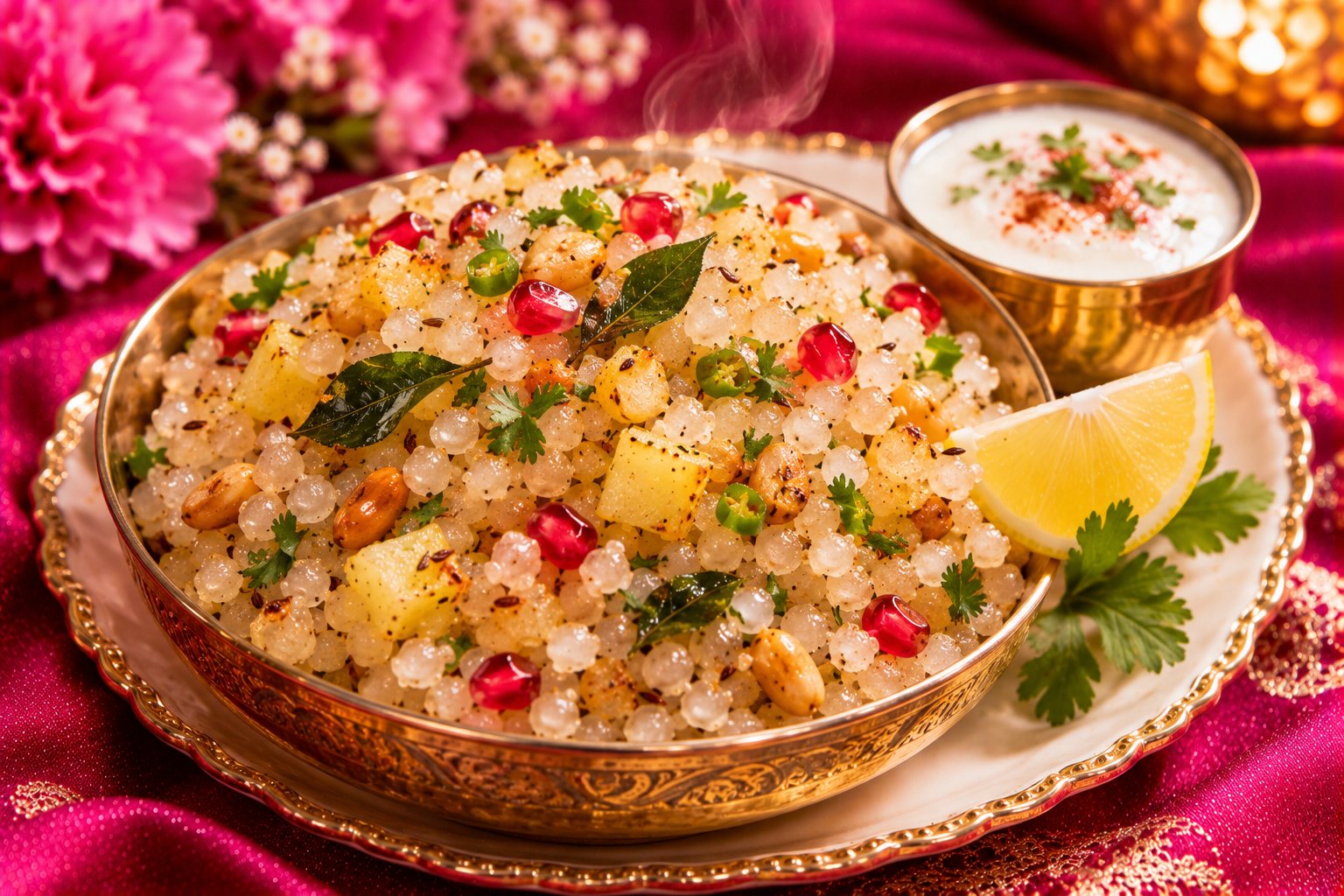
Sabudana (sago) are small pearls of starch made from cassava (tapioca) root. Sabudana khichdi is the best-known fasting food in Maharashtra and North India, eaten on Navratri, Ekadashi and Maha Shivratri because it contains no grains.
The main ingredients, with their English, Hindi and Urdu names.
Medium pearls, not the tiny or giant kind.
Roasted, skinned, coarsely ground.
Used on fasting days.
Grow it yourself: Potatoes, Green chilies, Cilantro (dhania), Curry leaf tree
Restaurant cooks do these things by habit. Here’s what each step is actually doing to the food, so you can cook by understanding instead of guesswork.
Rinse the pearls 3–4 times until the water runs almost clear.
Loose starch dust on the pearls turns to glue when heated; rinsing it away is the first step to separate pearls.
Add only enough water to reach the top of the pearls, then soak 4–6 hours.
The pearls absorb what they need and swell through to the center. Too much water makes them mushy; too little leaves a hard white core.
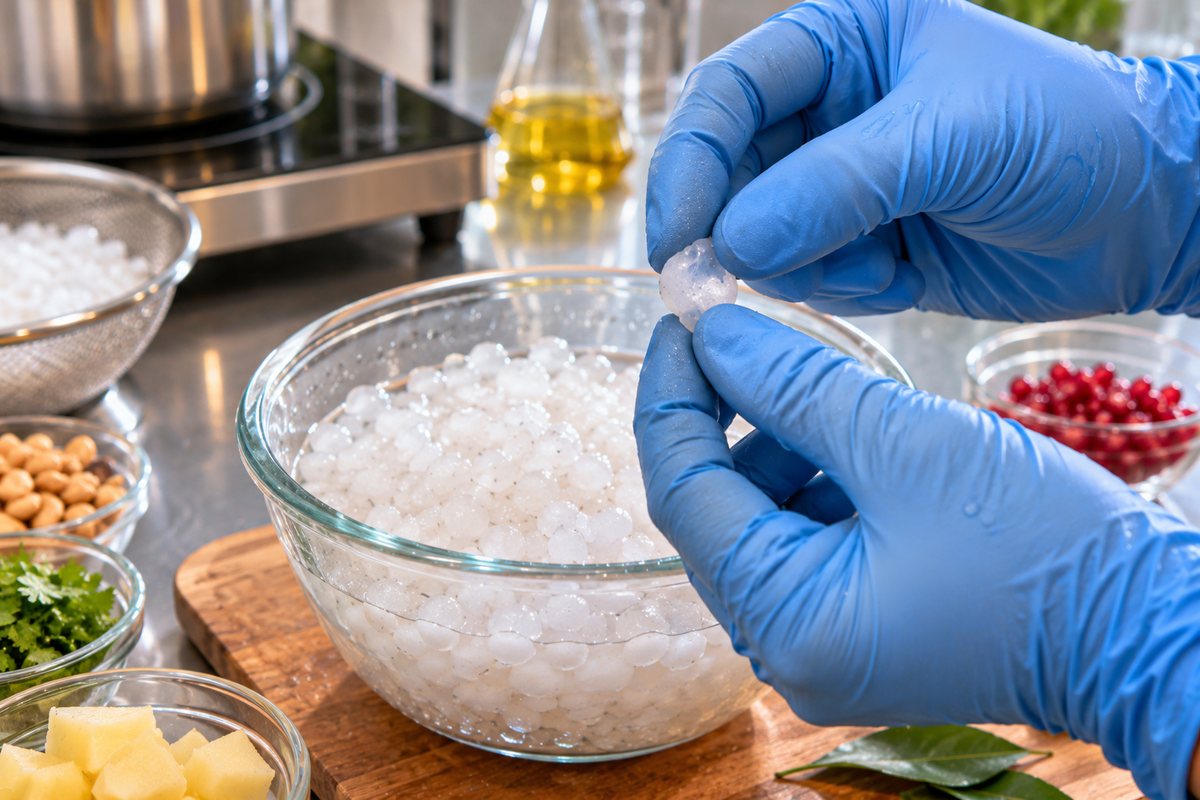
Press a pearl between your fingers before cooking.
If it squashes easily with no hard center, the starch is fully hydrated and needs only a few minutes of heat.
Toss the soaked pearls with peanut powder before they hit the pan.
The ground peanuts absorb surface moisture and coat each pearl in a little fat, so they don’t fuse together.
Stir over medium-low heat just until the pearls turn translucent, 5–7 minutes.
Translucent means the starch has gelatinized; keep cooking and the pearls burst and turn gummy.
Exact amounts and timings are in the recipe card below.
A quick-energy fasting food; peanuts make it more balanced.
1.7 g protein per 100 calories. Estimated from the ingredients with USDA FoodData Central values.
Gym-friendly tip: Pair with a protein: ¾ cup Greek yogurt dip (about +16 g) or a boiled egg on the side (+6 g each).
Tapioca is naturally gluten-free.
Peanuts add protein and fat that slow digestion of the starch.
General nutrition information, not medical advice. Numbers marked “estimated” are calculated from the recipe’s ingredients and vary with brands and portions. If you have diabetes, heart or kidney disease, a food allergy, or are pregnant, ask your doctor or a registered dietitian how this dish fits your diet.
Health sources: Dietary Guidelines for Americans
See the full ingredient health guide: benefits, traditional roots and the science →
4–6 hours or overnight, with water just level with the pearls.
Yes; it’s grain-free. Use sendha namak and skip onion and garlic.
The pearls weren’t rinsed enough, were soaked in too much water, or were cooked too long.
It needed more soaking time or a little more water.
Yes; it’s pure tapioca starch.
Desi restaurant favorites, recreated at home and explained with food science: every recipe is tested in a home kitchen and comes with the why behind each step.
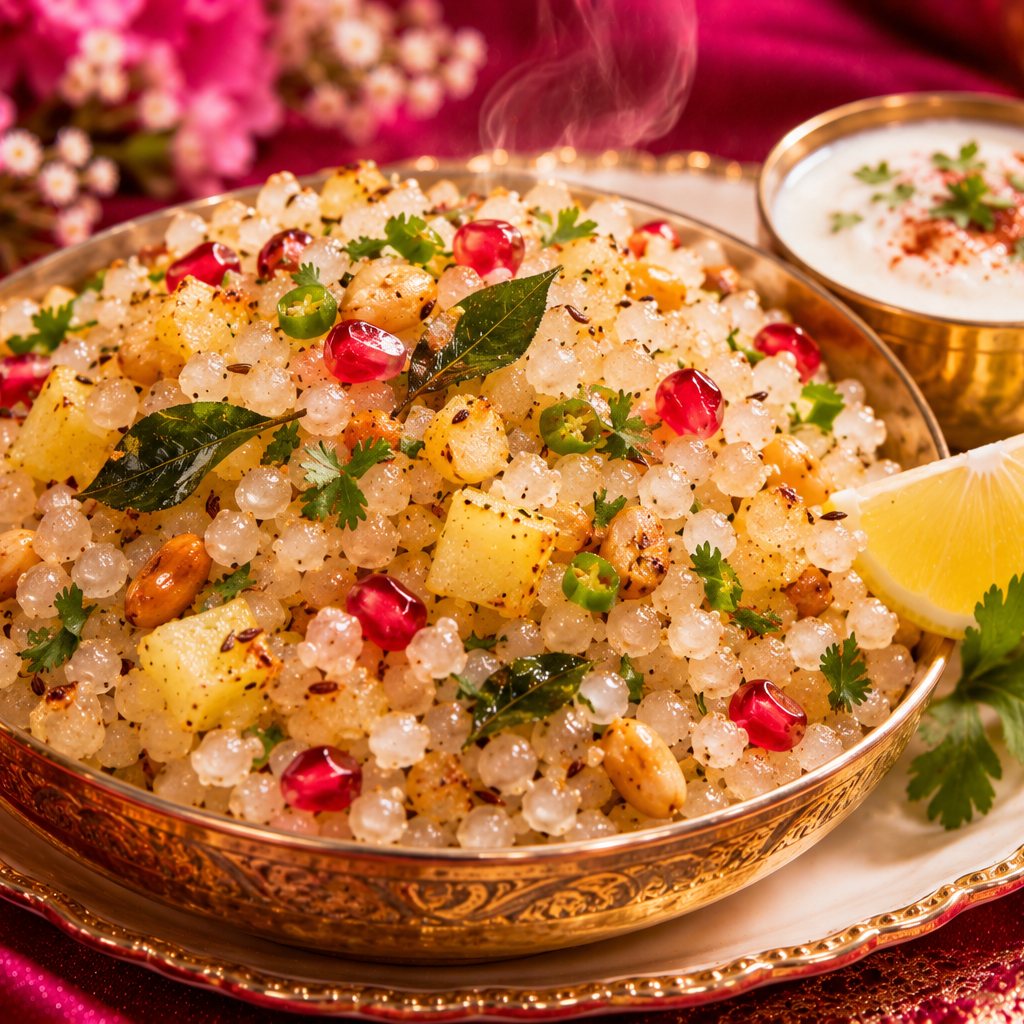
Non-sticky sabudana khichdi: soaked tapioca pearls tossed with roasted peanut powder, potato, cumin, green chili and lemon. The Navratri and Ekadashi fasting classic, with the food science of separate, fluffy pearls.