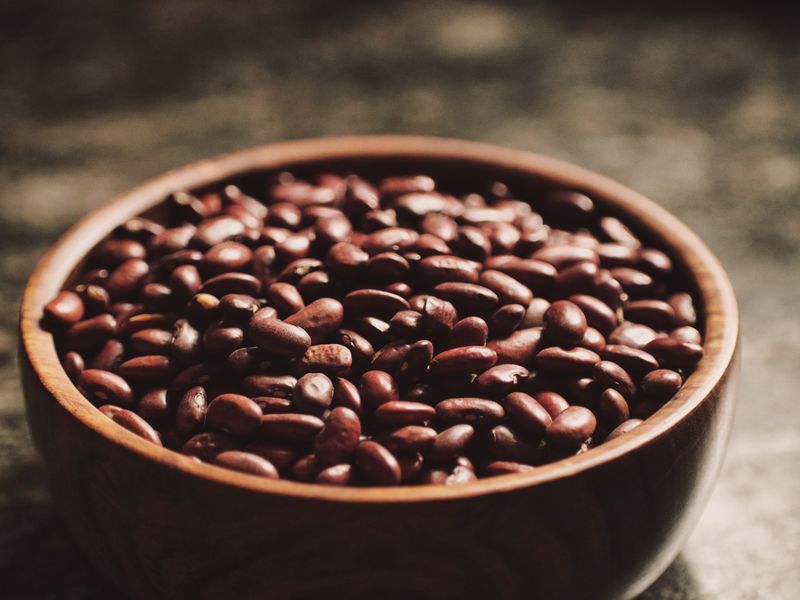
Red kidney beans (canned)
राजमाلال لوبیا
rājmā · lāl lobiyā
Canned dark or light red kidney beans, such as Goya, in 15.5-oz cans.
Its job: The heart of the dish: meaty, creamy beans that thicken their own gravy.
Also called Kidney Bean Curry with Rice · राजमा चावल · راجما چاول
Canned kidney beans simmered in the standard Indian base until they turn thick and creamy on their own, finished with a spoon of desi ghee and served over basmati rice. The science explains where the creaminess comes from.
Rajma chawal is red kidney bean curry served over rice, the famous Punjabi Sunday lunch. Beans and rice together make a more complete protein, and a serving of rajma has about 10 g of fiber before the rice.
 From the MedRise Food Science kitchenPublished
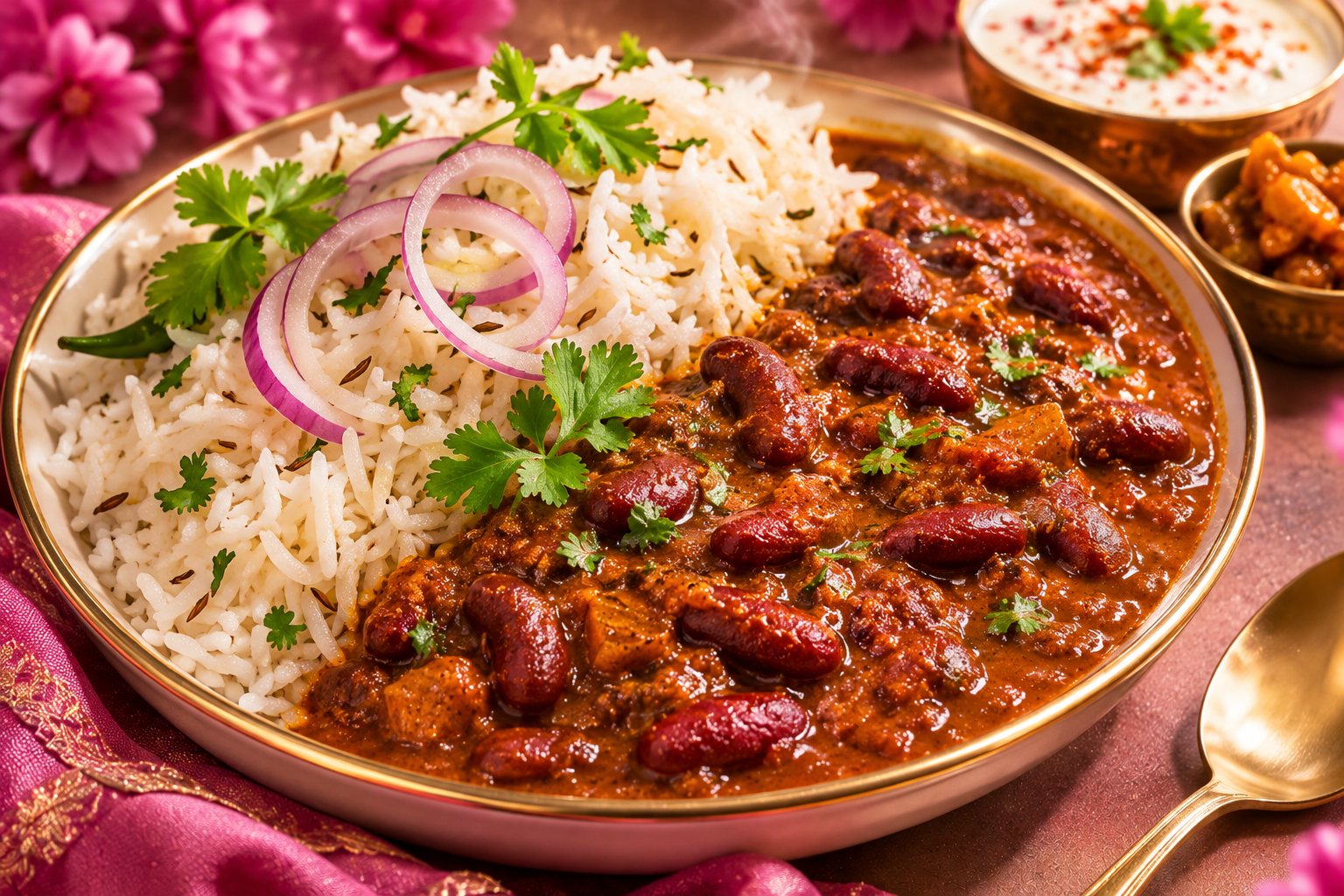
Rajma chawal is red kidney beans (rajma) cooked in a thick, spiced gravy and served over rice (chawal): one of the great comfort meals of Punjabi home cooking. Across North India it’s known as rajma chawal; in some Punjabi families it goes by another name, mothi chawal.
This version builds the gravy on the standard Indian base and uses canned kidney beans, such as Goya, to save the overnight soak and long cooking. A short pressure cook and a little mashing turn the beans thick and creamy without any cream, and a spoon of desi ghee finishes it.
The main ingredients, with their English, Hindi and Urdu names. The base ingredients are explained on the Indian base page.
Canned dark or light red kidney beans, such as Goya, in 15.5-oz cans.
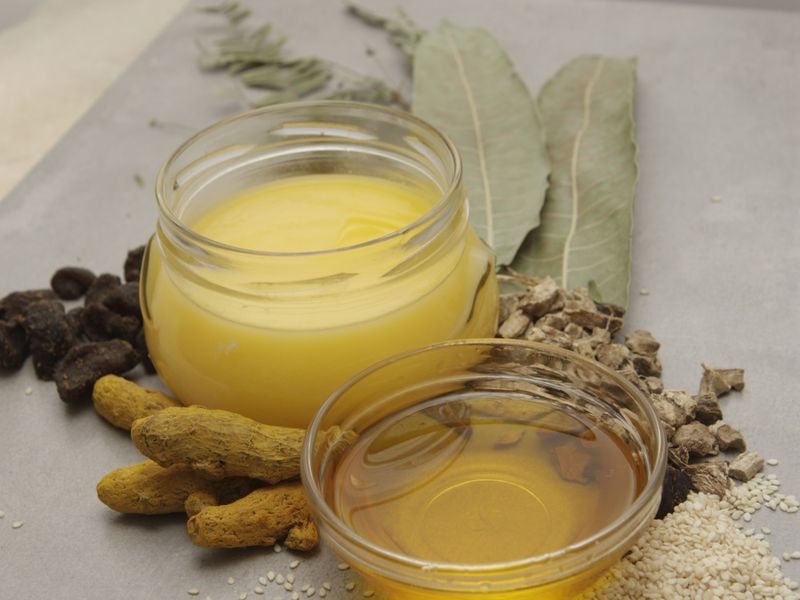
Clarified butter, sold as “ghee” or “desi ghee.”
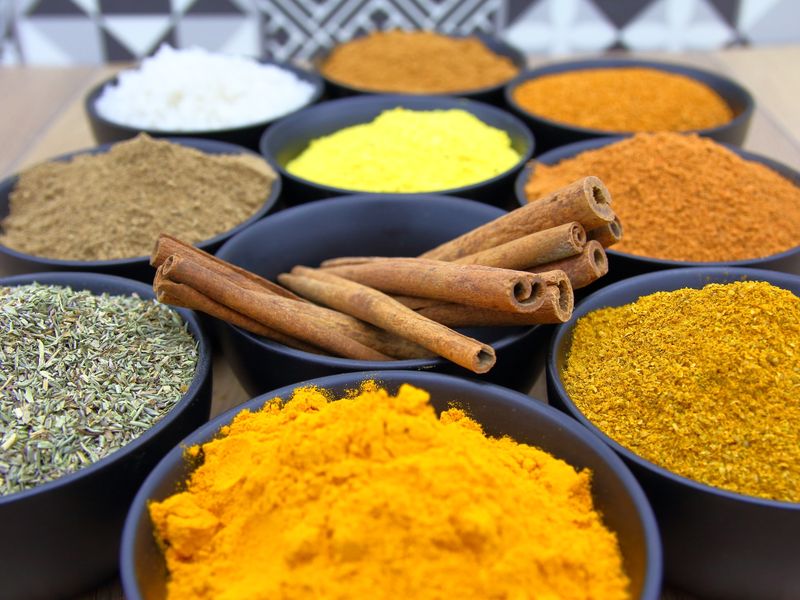
A ground blend of warming spices.
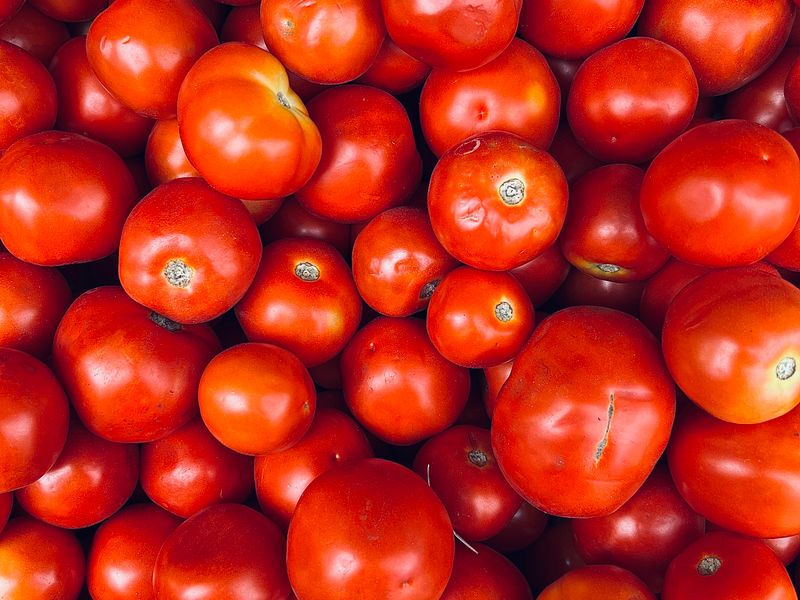
Fresh tomatoes, pureed, or canned crushed tomatoes.
Grow it yourself: Dry beans (rajma), Tomatoes, Cilantro (dhania), Garlic, Ginger
Restaurant cooks do these things by habit. Here’s what each step is actually doing to the food, so you can cook by understanding instead of guesswork.
Drain and rinse the canned beans, then add them to the finished base.
Canned beans are fully cooked inside the can, so they only need time to soak up flavor and soften further. Rinsing washes off the salty, starchy canning liquid, so you control the salt and the gravy tastes cleaner.
Pressure cook briefly, then mash some of the beans against the side of the pot.
Beans are full of starch. As they cook, some of their skins split and starch seeps into the liquid, and mashing a portion releases much more. That starch thickens the gravy into a creamy, velvety sauce with no dairy at all. It’s the same reason dal makhani turns creamy before any cream goes in.
Pressure cook the beans in the gravy for 10 minutes.
Canned beans often contain calcium chloride, a firming agent that keeps them whole in the can. At high pressure the Instant Pot cooks at about 239–244°F (115–118°C), hotter than a simmer, which softens the beans past that firmness so they absorb the masala and break down easily when mashed.
Stir in a spoonful of desi ghee just before serving.
Ghee is butter with the water removed and the milk solids lightly browned, which gives it a nutty, toasty aroma. Those aromas are volatile and fade with long cooking, so a spoonful at the end gives the dish a fresh, rich finish and a glossy look.
Stop cooking when the gravy is slightly looser than you want.
As it cools, the starch in the gravy sets and it thickens noticeably. Add a splash of hot water when reheating.
Serve the rajma over basmati rice.
Beans and grains complement each other nutritionally: beans supply plenty of the amino acid lysine, which grains are low in, and rice supplies amino acids that beans are short on. Together they make a more complete protein, one reason bean-and-rice dishes appear in cuisines around the world.
Score, blanch for 30–60 seconds, chill in ice water, and the skins slip right off. Peeled tomatoes cook into a smoother, silkier masala with no chewy flecks of skin.
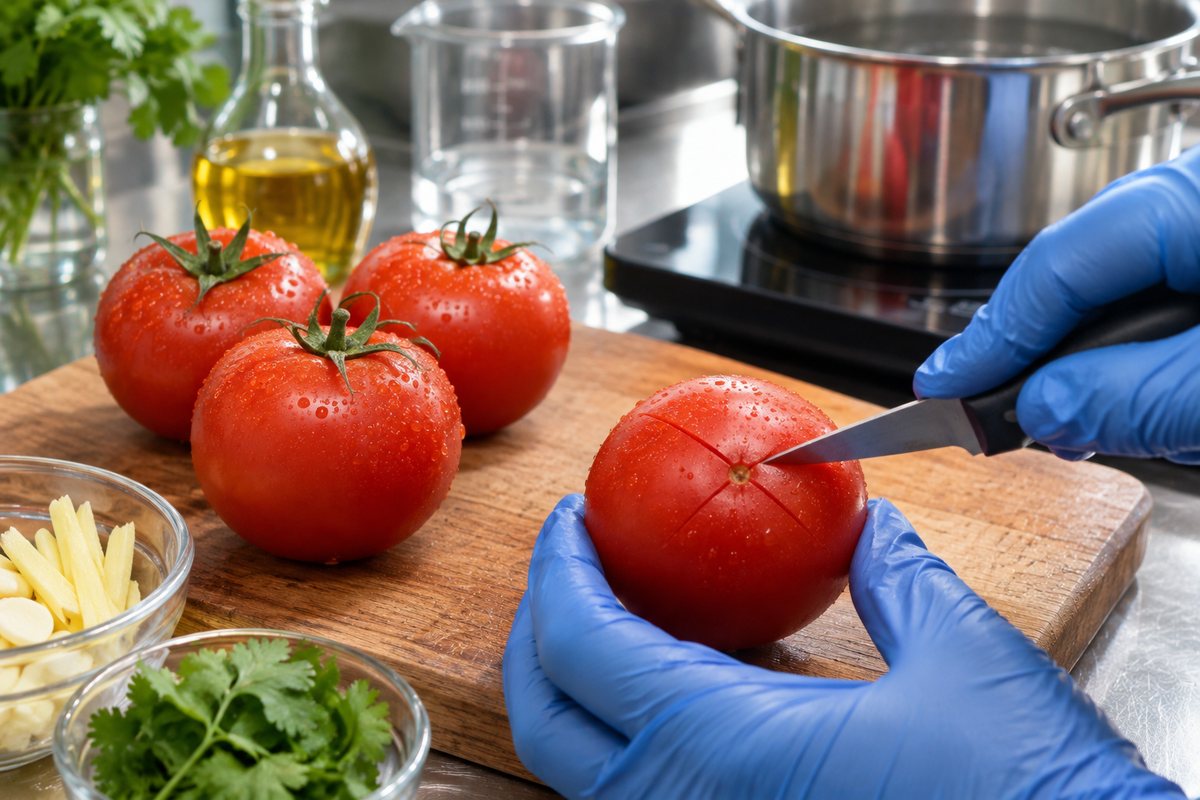
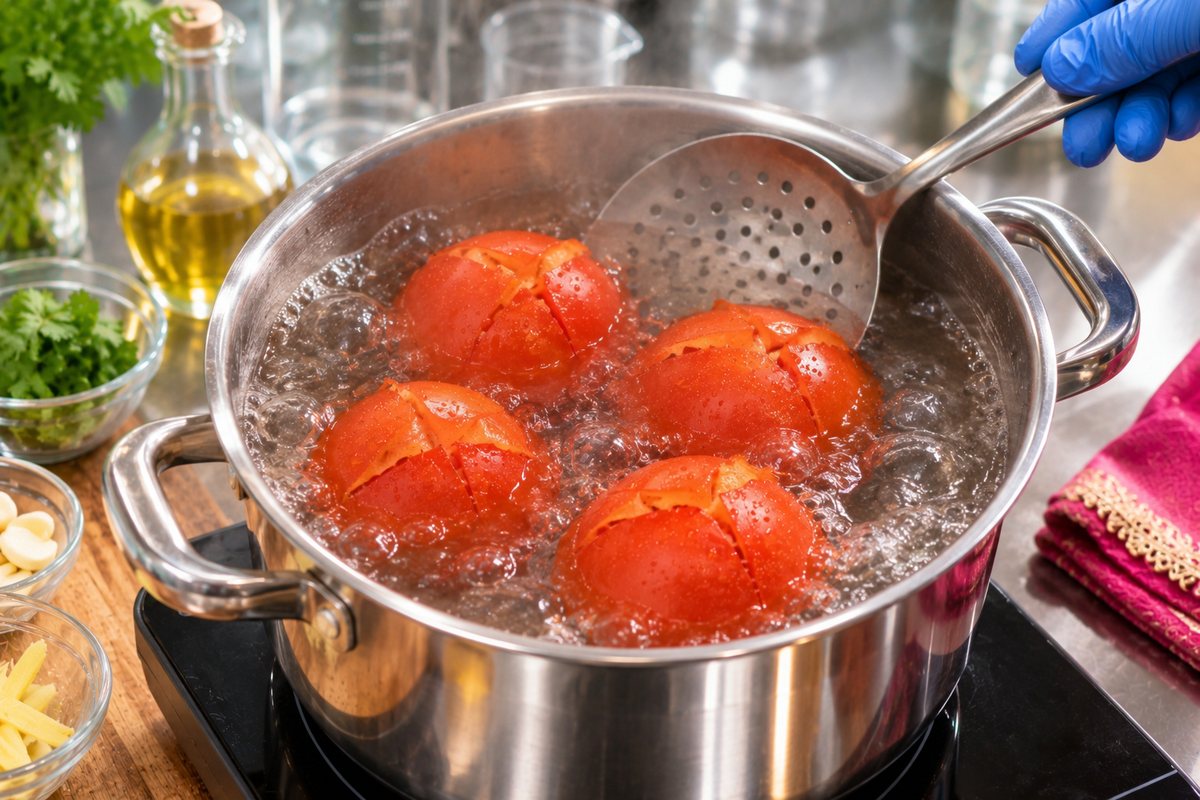
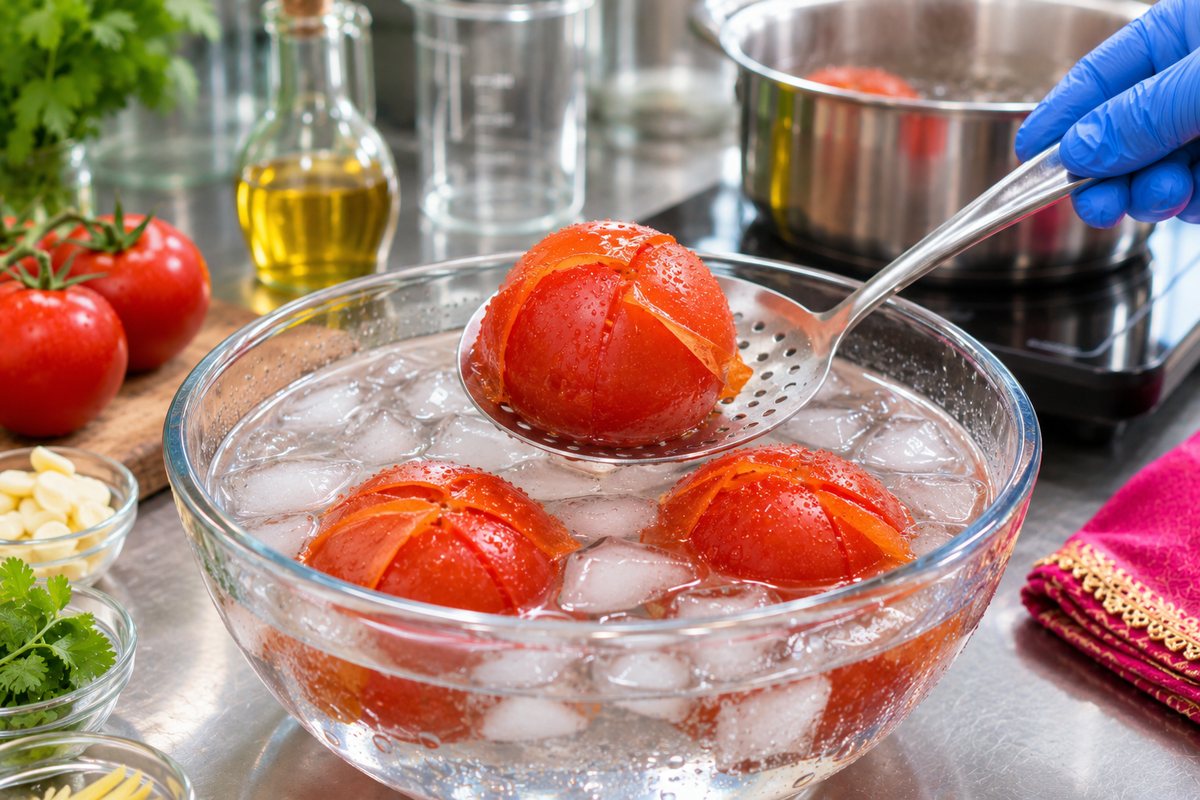
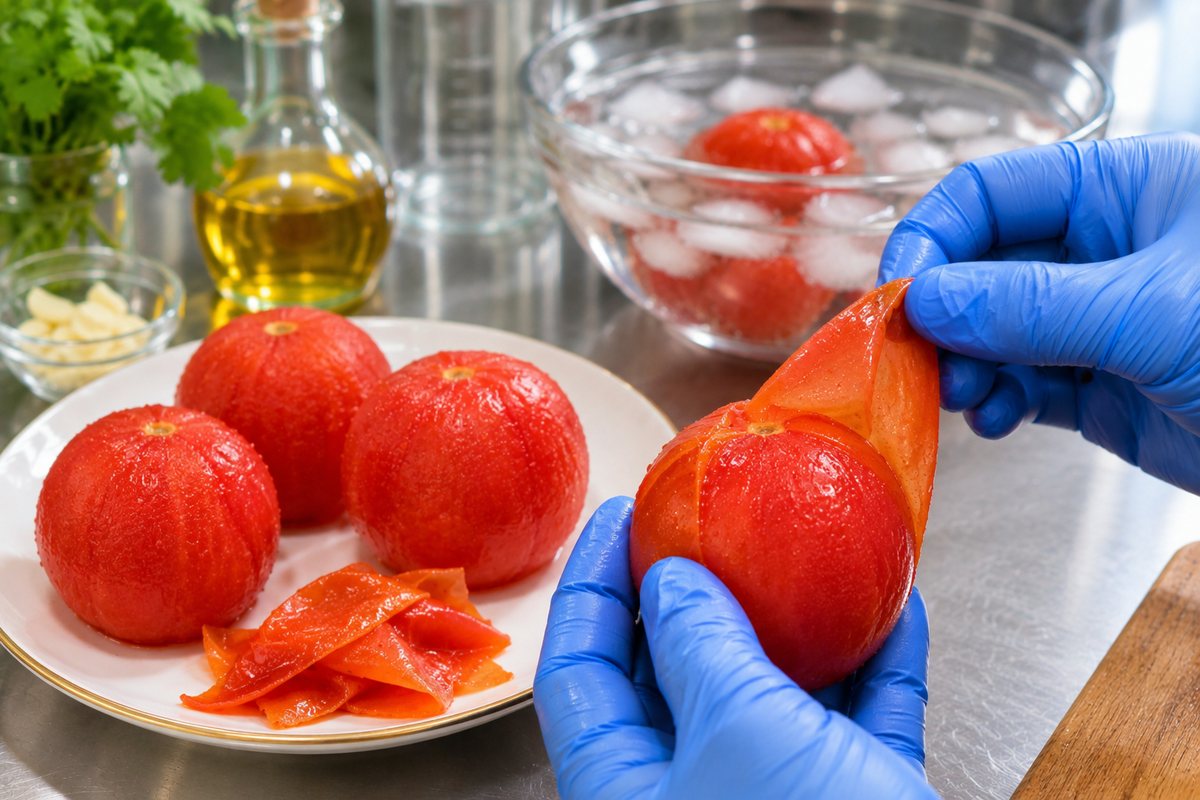
Tomato skin is a tough, waxy layer that doesn’t break down with cooking; in a long-cooked masala it curls into chewy flecks. The skin is also where almost all of a tomato’s flavonoids sit, mainly naringenin chalcone and rutin, the kind of plant compounds that can taste faintly bitter or astringent. Texture is the bigger, better-proven reason, but peeled tomatoes give the smoothest, cleanest-tasting gravy.
A short plunge heats only the outer layer. The heat weakens the pectin that glues the skin to the flesh, and steam forming underneath pushes the skin away, so it splits and curls back at the X while the flesh inside stays raw and firm.
Ice water stops the cooking at once, so the flesh doesn’t turn soft and mushy, and makes the tomatoes cool enough to peel right away. More than about a minute in the boiling water starts to cook the flesh.
Sources: National Center for Home Food Preservation: Put It Up! Boiling Water Canning · Muir et al., Nature Biotechnology (2001): flavonoids in tomato peel
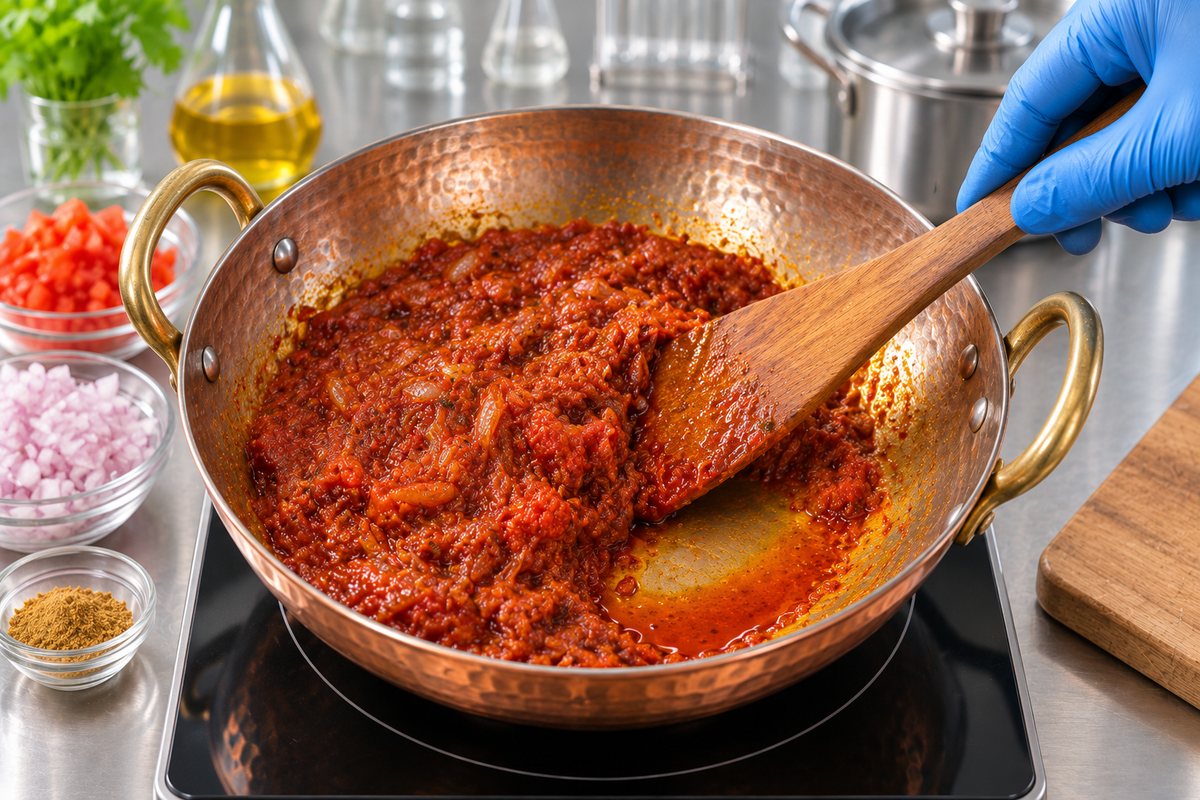
Exact amounts and timings are in the recipe card below.
What this dish brings to the table, with an honest rating of how strong the evidence is.
4.3 g protein per 100 calories. Estimated from the ingredients with USDA FoodData Central values. Rice not included: add about 205 calories and 4 g protein per cup of cooked basmati rice.
Gym-friendly tip: Serve with ¾ cup plain Greek yogurt as raita (about +16 g protein) or stir 100 g cubed paneer into the finished dal (about +18 g).
Kidney beans are rich in fiber and protein, and their creaminess comes from their own starch, not cream.
Beans supply the amino acid lysine that rice is short on, and rice supplies amino acids beans lack, so together they make a more complete protein.
Draining and rinsing canned beans removed about 41% of their sodium in a University of Tennessee study.
General nutrition information, not medical advice. Numbers marked “estimated” are calculated from the recipe’s ingredients and vary with brands and portions. If you have diabetes, heart or kidney disease, a food allergy, or are pregnant, ask your doctor or a registered dietitian how this dish fits your diet.
Fits these health goals: High blood pressure, High LDL cholesterol, Iron-deficiency anemia, Constipation and gut health, Celiac disease (gluten-free), Pregnancy (general guidance, not medical advice)
Health sources: Harvard T.H. Chan School of Public Health: Legumes and pulses · Pulses: healthy and sustainable food sources (Int J Mol Sci, 2017) · Duyff, Mount & Jones, sodium reduction in canned beans (J Culinary Science & Technology, 2011) · FDA Bad Bug Book: phytohaemagglutinin in red kidney beans · Dietary Guidelines for Americans
See the full ingredient health guide: benefits, traditional roots and the science →
Yes, it’s a balanced meal: kidney beans bring fiber and protein (about 13 g per serving before rice). Keep the rice portion moderate if you’re watching calories.
Some Punjabi families call rajma chawal “mothi chawal.” We couldn’t find a documented history of the name. If your family uses it, we’d love to hear where it comes from.
No. The creaminess comes from the beans’ own starch, released by cooking and mashing. A spoon of ghee at the end adds richness.
Rinsing is recommended: it removes extra salt and the canned taste. If you prefer, keep a few tablespoons for extra body and reduce the salt.
Yes. See the stovetop method in the recipe card; it takes about 30 extra minutes.
Desi restaurant favorites, recreated at home and explained with food science: every recipe is tested in a home kitchen and comes with the why behind each step.
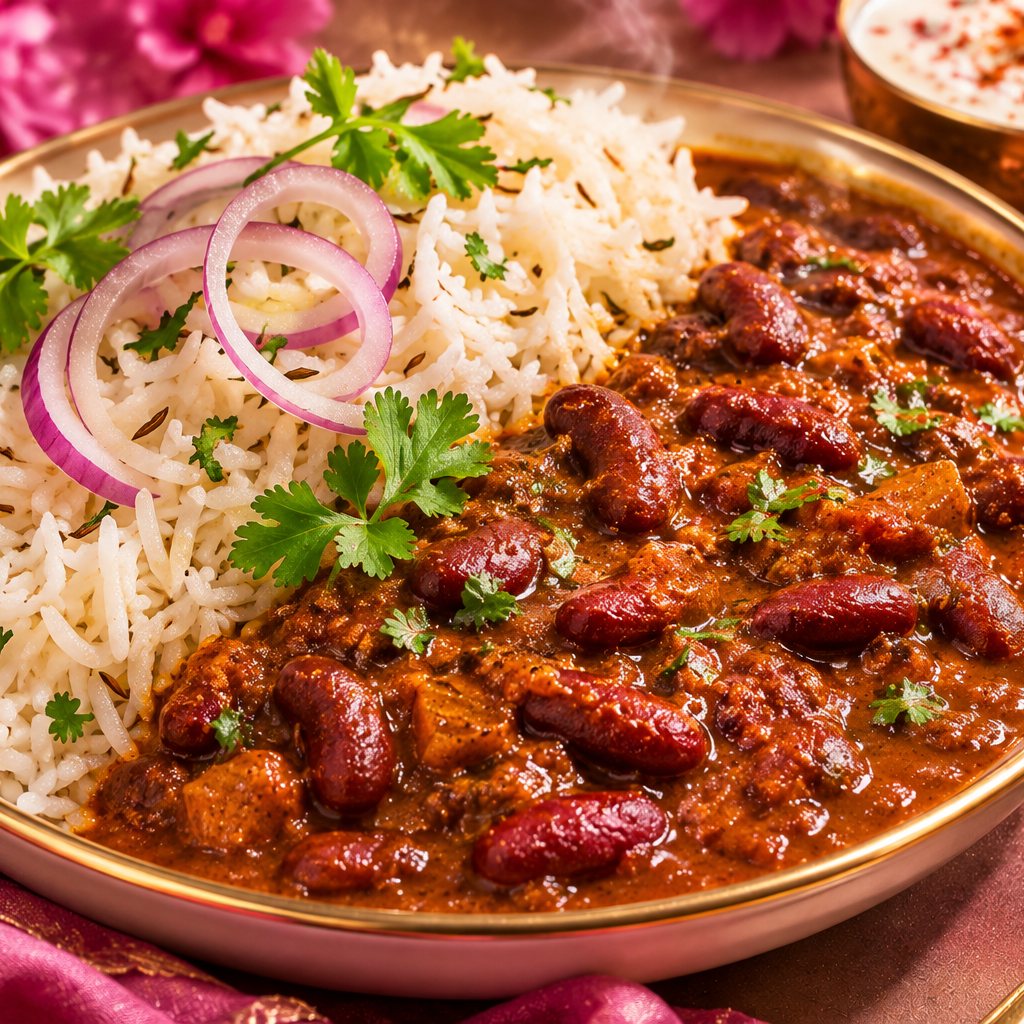
Creamy Punjabi rajma chawal made fast with canned kidney beans in the Instant Pot: the standard Indian base, a short pressure cook, a little mashing and a spoon of desi ghee. No cream needed. With the food science behind it.
No Instant Pot? A heavy pot works; it just takes a little longer.
How much to make, based on 4 people eating it once a day. One batch of this recipe makes 4 servings.
Why only a few days in the fridge? Refrigeration slows bacteria but doesn’t stop them; some, like Listeria, can still grow at fridge temperatures, which is why food-safety agencies set cooked leftovers at 3–4 days. Freezing at 0°F stops growth completely, so frozen portions stay safe indefinitely; the freezer times above are for best taste and texture.
Food-safety guidance: USDA, Leftovers and Food Safety · FoodSafety.gov storage chart