Science-backed recipe

Creamy Mushroom Masala That Tastes Meaty

Also called Mushroom Curry · Khumbi Masala · मशरूम मसाला · مشروم مصالحہ

Hard-seared mushrooms simmered in a classic Indian onion-tomato masala, then finished with ricotta and heavy cream. The science explains why mushrooms can taste as savory as meat.

In short

Mushroom masala is a creamy Indian curry of hard-seared mushrooms in an onion-tomato masala, finished with ricotta and cream for a restaurant-style (dhaba-style) gravy. Searing the mushrooms first is what makes it taste meaty.

Active
1 hr
Prep
15 min
Total
1 hr
Serves
4
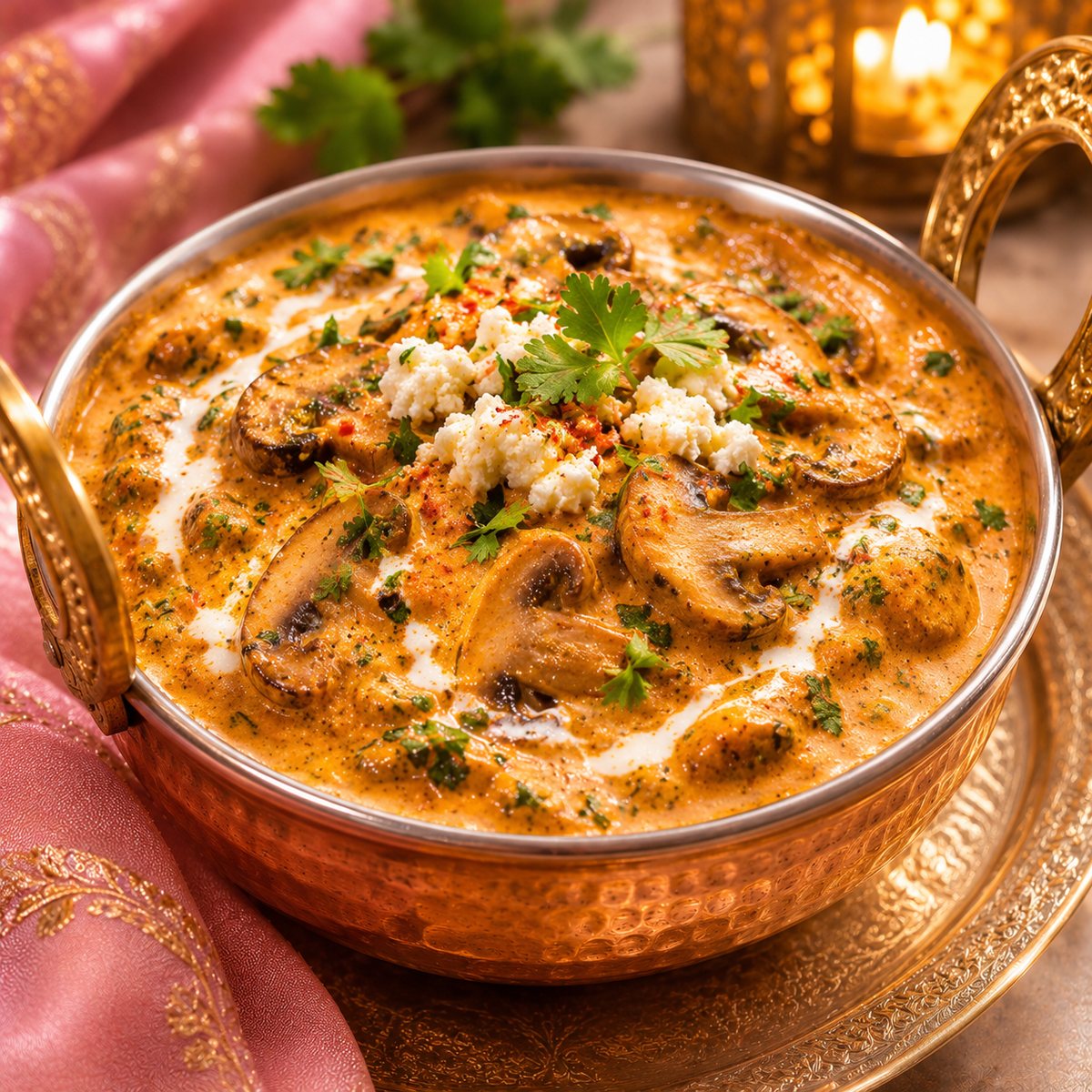
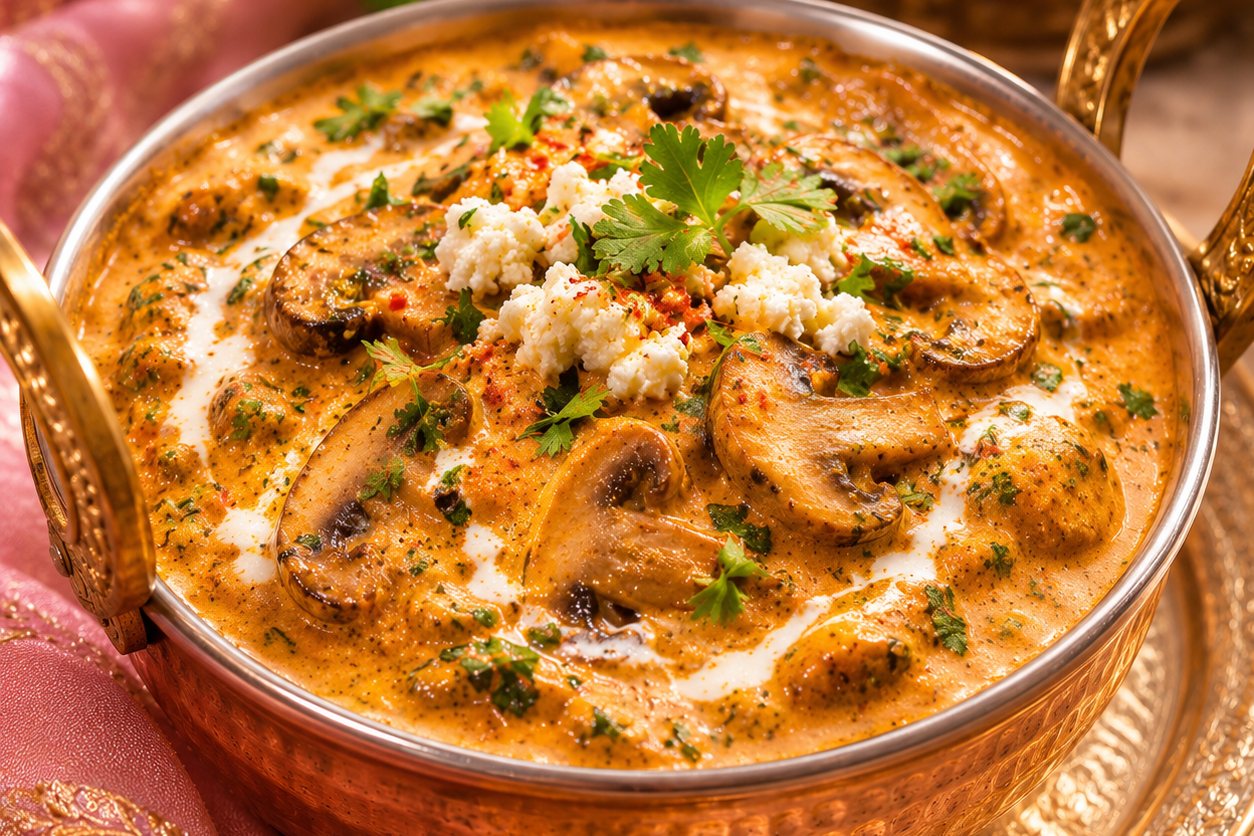
Creamy mushroom masala in a copper kadai with a swirl of cream, crumbled cheese and cilantro

Why this recipe works

  • ✓
    Seared, not stewedHard-browned mushrooms bring the deep, roasted flavor of seared meat.
  • ✓
    Umami on umamiMushrooms plus tomatoes multiply the savory taste that makes meat satisfying.
  • ✓
    The classic Indian baseBrowned onions, ginger-garlic, ground spices and tomatoes cooked until the oil separates.
  • ✓
    Rich, never grainyRicotta whisked into heavy cream melts into a silky sauce without curdling.

What makes a mushroom curry taste meaty?

Mushroom masala starts with the standard Indian base, often called a bhuna masala: cumin sizzled in oil, browned onions, ginger-garlic paste, salt, red chili and turmeric, then tomatoes cooked until the oil separates, and garam masala to finish. This recipe adds ground coriander and cumin with the chili and turmeric. Then seared mushrooms go in.

Mushrooms are naturally rich in umami, the savory taste that makes meat and broth satisfying. Searing them hard and pairing them with tomatoes amplifies it, and ricotta and heavy cream give the sauce the richness of a restaurant malai curry.

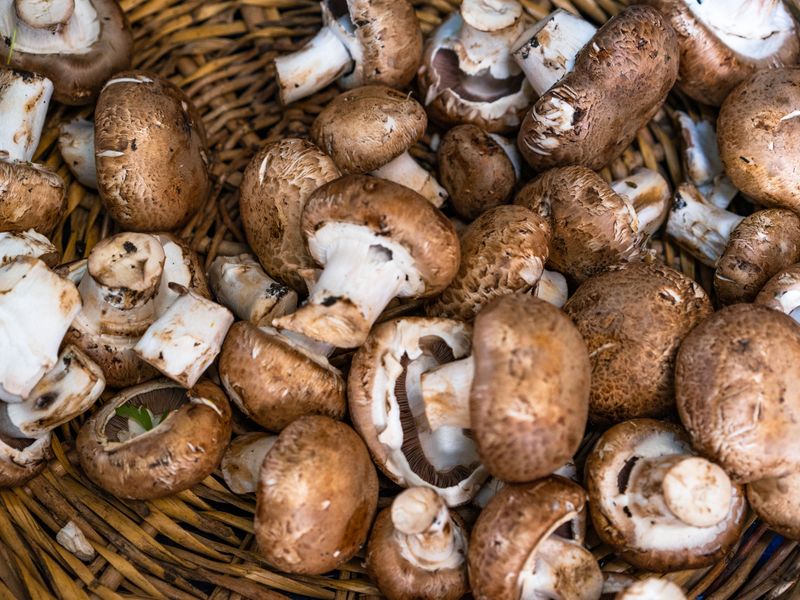
A basket of brown cremini mushrooms

Meet the ingredients

Here’s every ingredient you’ll need, with Hindi and Urdu names where a Desi kitchen has one, plus what each one is doing in the dish.

A basket of brown cremini mushrooms

Mushrooms

खुंभीکھمبی
khumbī

Cremini (baby bella) mushrooms are ideal: firmer and more flavorful than white button mushrooms. Shiitake or oyster mushrooms can be mixed in.

Its job: The “meat” of the dish. They’re rich in savory umami compounds and keep a satisfying, chewy bite.
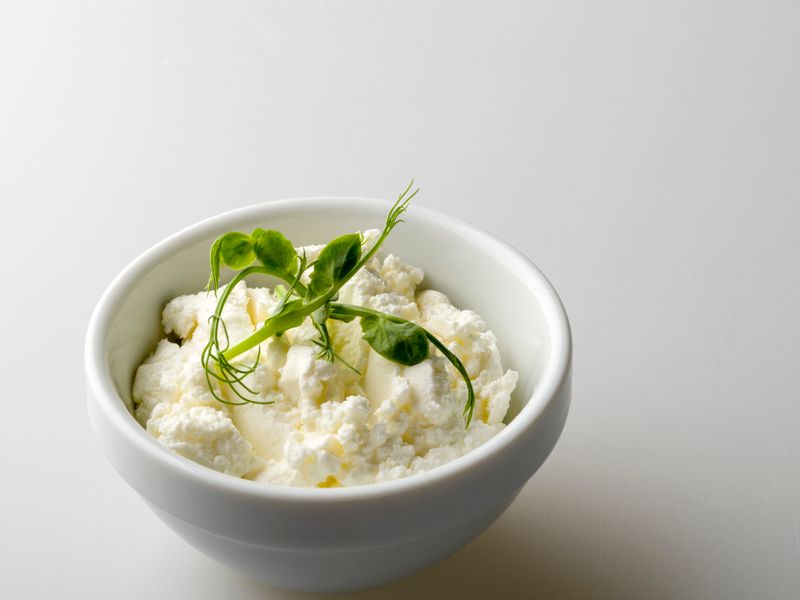
A bowl of fresh white ricotta cheese

Ricotta

A soft, fresh Italian cheese with small, moist curds. Use whole-milk ricotta. Its closest Desi cousin is fresh chhena, the curds used to make paneer.

Its job: Body and a mild, milky sweetness. Whisked into the cream, it melts into the sauce like malai.
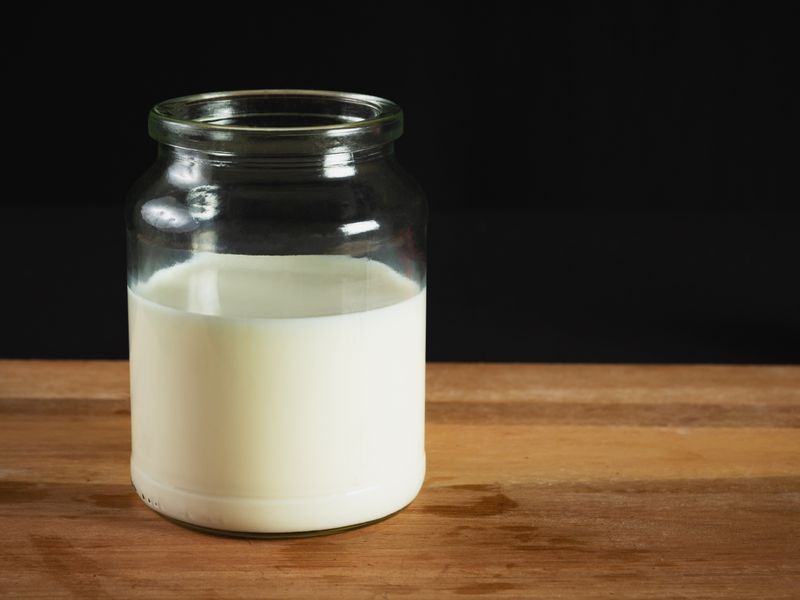
A glass jar of cream

Heavy cream

Cream with at least 36% milk fat, sold as heavy cream or heavy whipping cream.

Its job: Richness, and its high fat keeps the sauce smooth even with acidic tomatoes.
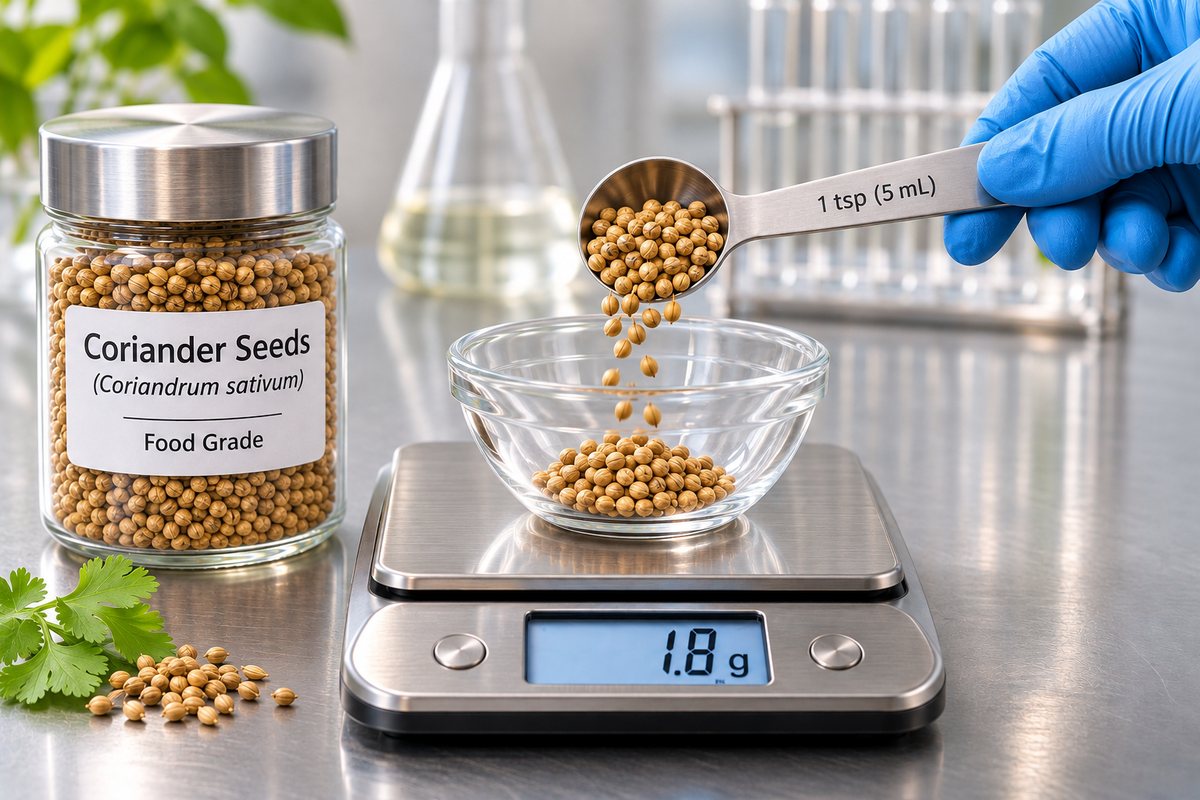
Coriander seeds (dhaniya) measured by the teaspoon on a digital scale reading 1.8 g

Coriander powder

धनिया पाउडरدھنیا پاؤڈر
dhaniyā pāuḍar

Ground coriander seeds (the seeds shown here), sold ready-ground as dhania powder.

Its job: The backbone of most Indian curry bases: a warm, citrusy flavor that also helps thicken the gravy.
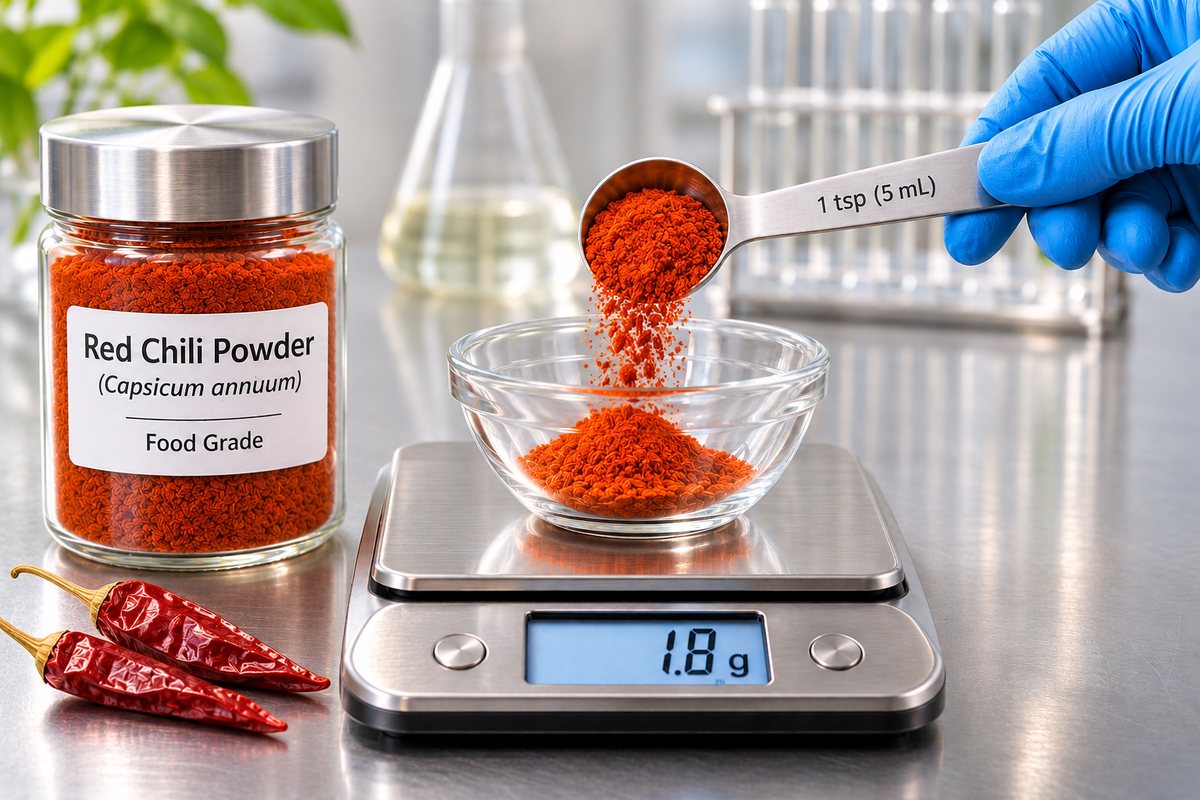
Red chili powder (lal mirch) measured by the teaspoon on a digital scale reading 1.8 g

Red chili powder

लाल मिर्च पाउडरلال مرچ پاؤڈر
lāl mirch pāuḍar

Ground dried red chilies. Kashmiri chili powder is mild with a deep red color; regular chili powder is hotter.

Its job: Heat and color. Choose Kashmiri for color without much fire.
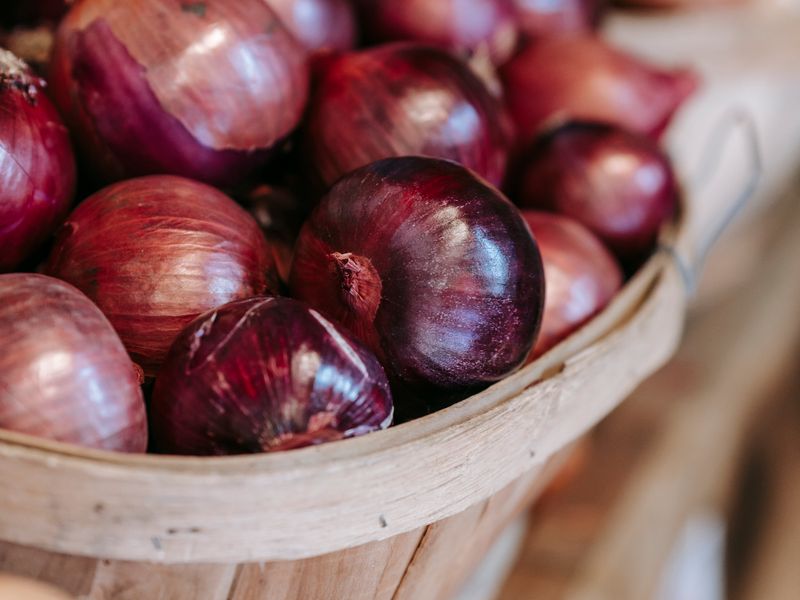
A basket of whole red onions

Onion

प्याज़پیاز
pyāz

Red or yellow onions, finely chopped.

Its job: Browned slowly, they become the sweet, savory body of the gravy.
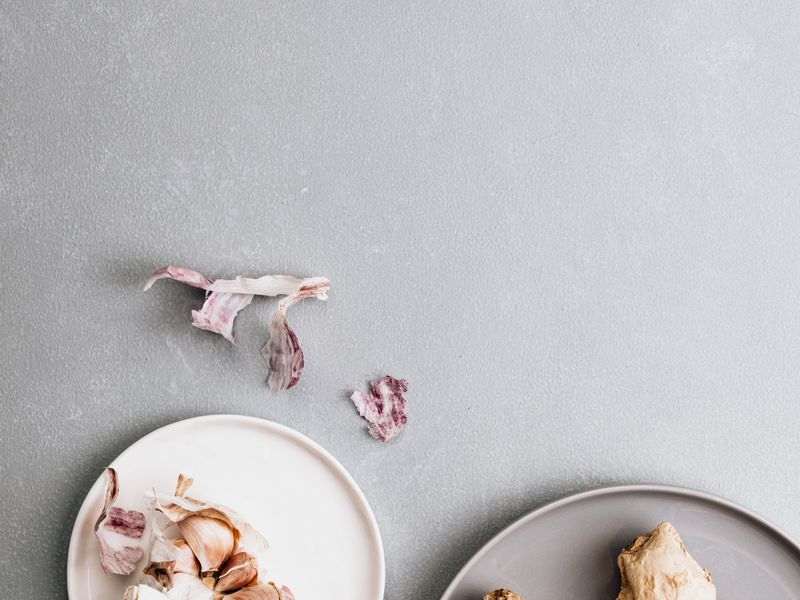
Fresh ginger root and garlic cloves on small plates

Ginger-garlic paste

अदरक लहसुन पेस्टادرک لہسن پیسٹ
adrak lahsun

Fresh ginger and garlic ground into a paste.

Its job: The pungent aromatic base, mellowed by cooking with the onions.
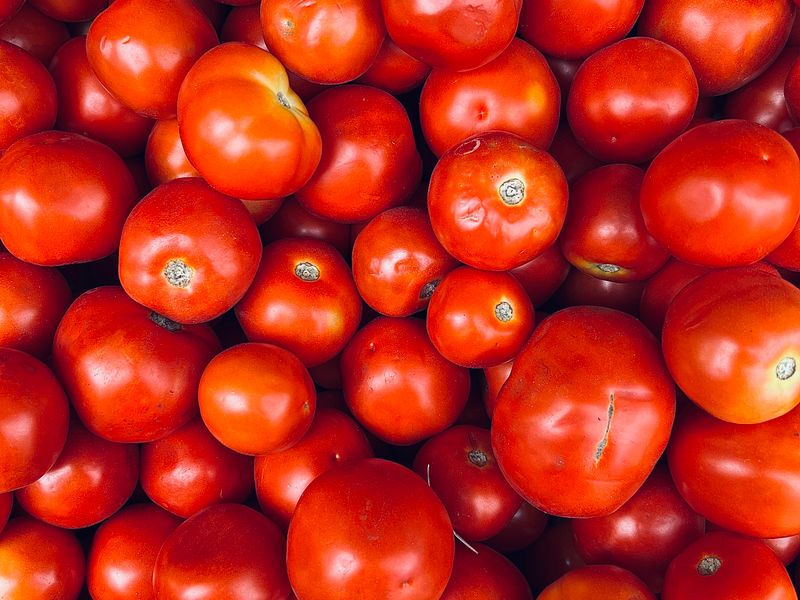
A pile of ripe red tomatoes

Tomato

टमाटरٹماٹر
ṭamāṭar

Ripe tomatoes, blanched, peeled and pureed.

Its job: Tang, body and a big dose of glutamate, which teams up with the mushrooms for extra savory flavor.
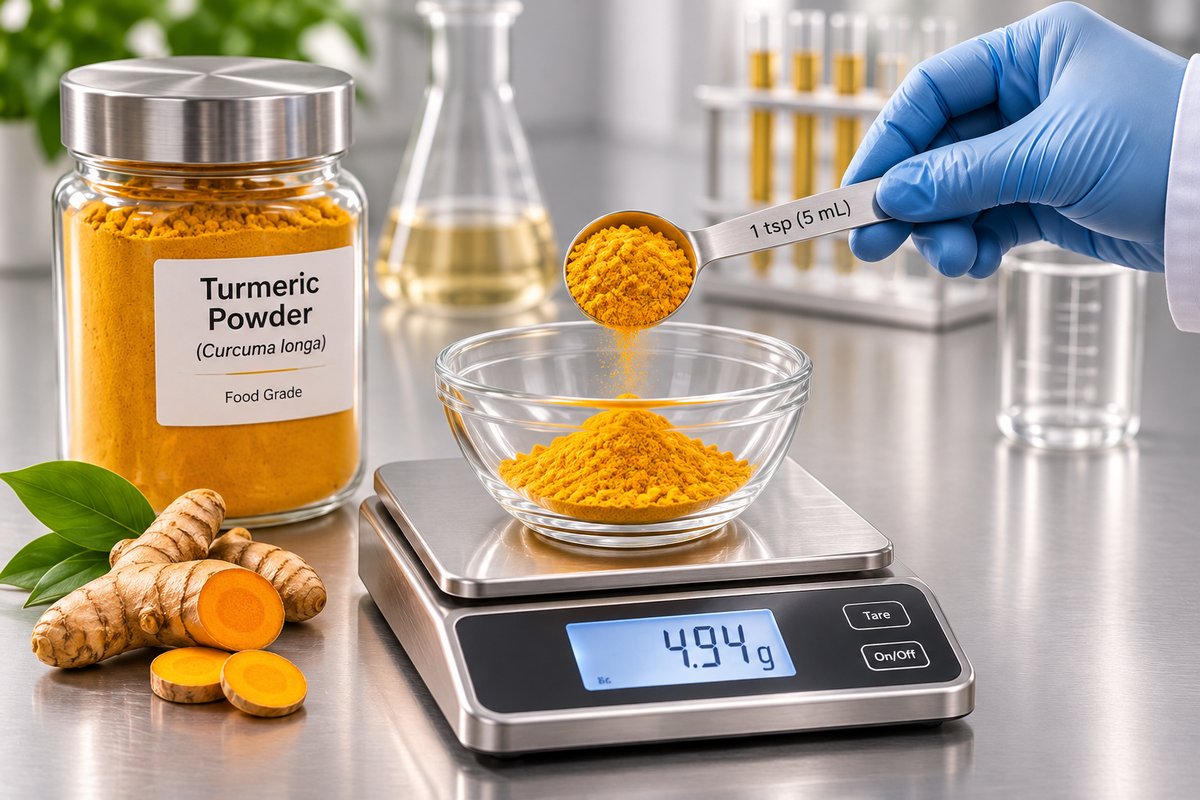
Ground turmeric (haldi) being measured by the teaspoon onto a digital scale, beside a jar of turmeric powder and fresh turmeric root

Turmeric

हल्दीہلدی
haldī

Ground turmeric root.

Its job: Golden color and an earthy warmth, bloomed in the hot oil.
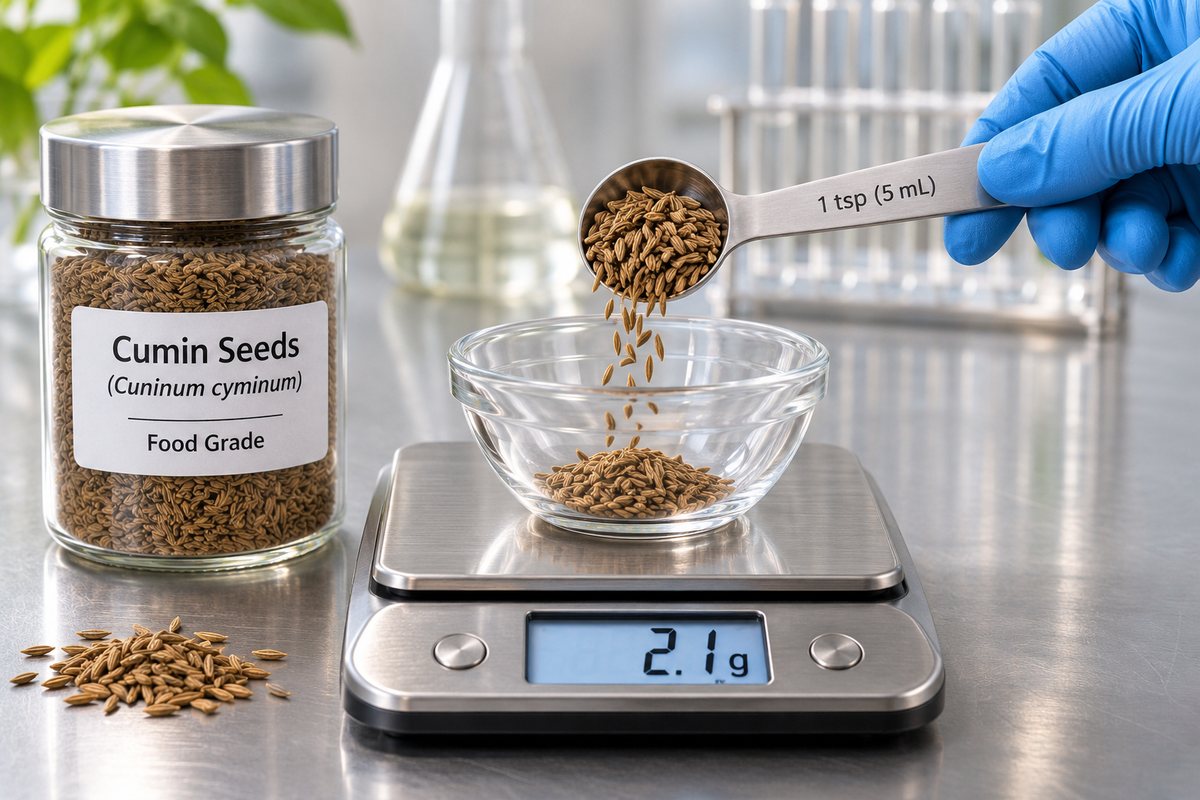
Cumin seeds (jeera) poured from a 1 tsp measuring spoon onto a digital scale reading 2.1 g, beside a labeled jar

Cumin, whole and ground

जीराزیرہ
jīrā · zīra

Thin, ridged brown seeds, used whole and as ground cumin.

Its job: Whole seeds flavor the oil first; ground cumin adds an earthy warmth to the base.
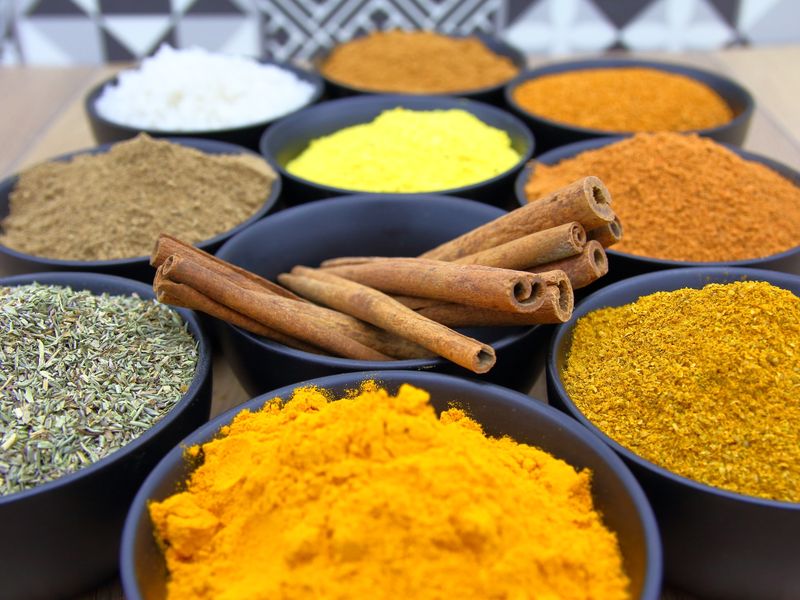
Bowls of Indian spices with cinnamon sticks, the warm spices that go into garam masala

Garam masala

गरम मसालाگرم مصالحہ
garam masālā

A ground blend of warming spices such as cinnamon, cardamom, cloves and black pepper.

Its job: An aromatic finishing touch, added at the end.
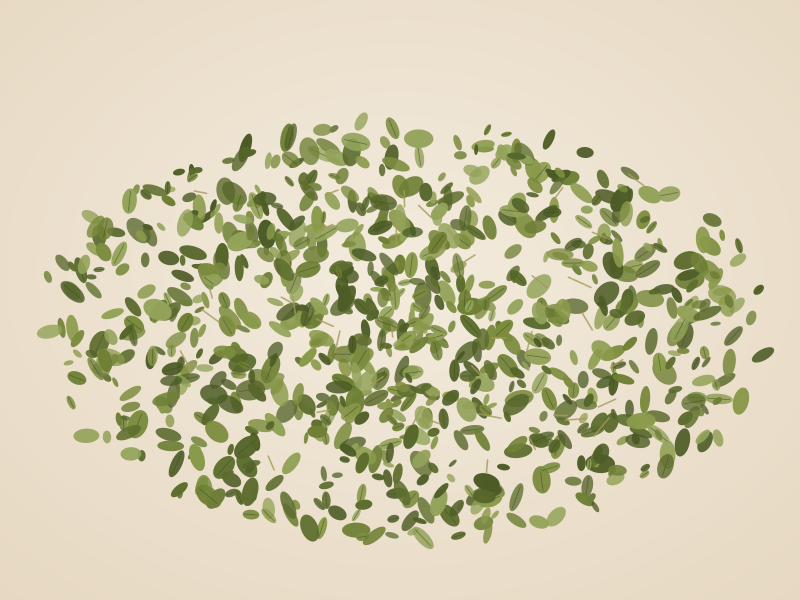
Illustration of crumbled dried fenugreek leaves (kasuri methi)

Kasuri methi

कसूरी मेथीقصوری میتھی
kasūrī methī

Dried fenugreek leaves.

Its job: Crushed in at the end for the aroma of a restaurant curry.
The lab notes

The science behind every step

Restaurant cooks do these things by habit. Here’s what each step is actually doing to the food, so you can cook by understanding instead of guesswork.

Lab note01

Why mushrooms taste meaty

Use plenty of mushrooms and pair them with tomatoes.

Savory “umami” flavor comes mainly from glutamate and from compounds called nucleotides. Meat is rich in one nucleotide, inosinate; mushrooms are rich in another, guanylate, along with glutamate of their own. When glutamate meets one of these nucleotides, the savory taste is amplified far beyond either alone. In one America’s Test Kitchen tasting, glutamate and nucleotides tasted only mildly savory on their own, but the combination scored a perfect 10. Tomatoes add more glutamate, so mushrooms in a tomato masala are a built-in umami pairing.

Lab note02

Sear before you simmer

Brown the mushrooms hard in a hot pan, in batches, before they ever touch the gravy.

Mushrooms are roughly 80–90% water. As long as their surface is wet, it can’t get much hotter than water’s boiling point, 212°F (100°C), and the browning reactions that create roasted, meaty flavors barely happen. A hot pan with room between the pieces lets the water escape as steam, so the surface dries and browns. Crowd them and they release water faster than it can evaporate, and they stew to a gray, rubbery finish.

Lab note03

Salt after they brown

Season the mushrooms once they’re golden, not when they hit the pan.

Salt pulls water out of the mushrooms by osmosis. Added at the start, it floods the pan with liquid before it’s hot enough to boil it off, which stalls browning. Salting at the end seasons them without slowing the sear.

Lab note04

Why mushrooms stay chewy

Cut the mushrooms in halves or quarters, not thin slices.

Mushrooms aren’t plants. Their cell walls are built from chitin, the same tough material found in insect shells, which doesn’t soften the way vegetables do. That’s why mushrooms keep a meaty, chewy bite even after simmering in a gravy, and why bigger pieces feel more like meat.

Lab note05

The classic base, explained

Bloom the cumin, brown the onions, add the ginger-garlic paste, bloom the ground spices, then cook the tomatoes until the oil separates.

This is the standard Indian base, in its standard order. Slowly browned onions build sweetness and savory depth through caramelization and the Maillard reaction; ginger-garlic paste goes in after them because garlic browns and turns bitter much faster than onion. The ground spices bloom in the oil, since their flavor dissolves in fat, and the tomatoes come next: their water would stop the onions browning, and their acid would keep the onions from softening. When the oil separates, most of the tomato water has cooked off and the base is ready. The Indian base page explains every step in detail.

Lab note06

Optional: dried shiitake for extra depth

Grind 2–3 dried shiitake mushrooms into a powder and add it with the ground spices.

Drying concentrates mushroom flavor. America’s Test Kitchen lists dried shiitake at about 150 mg of guanylate per 100 g, among the richest sources there are. A spoonful of shiitake powder pushes the umami pairing with tomatoes even further, without tasting like a different dish.

Lab note07

Ricotta and cream without curdling

Whisk the ricotta into the heavy cream, turn the heat to low and stir it in. Don’t let it boil.

Dairy curdles when its casein proteins clump together, and heat combined with acid, like a tomato gravy, is exactly what makes them clump. Heavy cream (at least 36% fat) contains so little casein and so much protective fat that it stays smooth. Ricotta is lower in fat and already made of small curds, so whisking it into the cream first disperses those curds, and keeping the sauce below a boil lets them melt in instead of tightening into grains.

Lab note08

Fat carries flavor

Finish with the creamy mixture for a rich, round sauce.

Many spice aroma compounds dissolve in fat, so the cream helps carry them across your palate. Dairy fat also coats the tongue and softens the sharp edges of tomato acid and chili heat, which is why creamy curries taste rounder and richer.

Lab note09

Kasuri methi goes in last

Crush the kasuri methi between your palms and stir it in at the very end.

Its aroma comes from volatile compounds that escape into the air the longer they cook. Adding it at the end keeps that fragrance in the curry. The garam masala gets the same treatment one step earlier, at the end of the base.

Technique, step by step

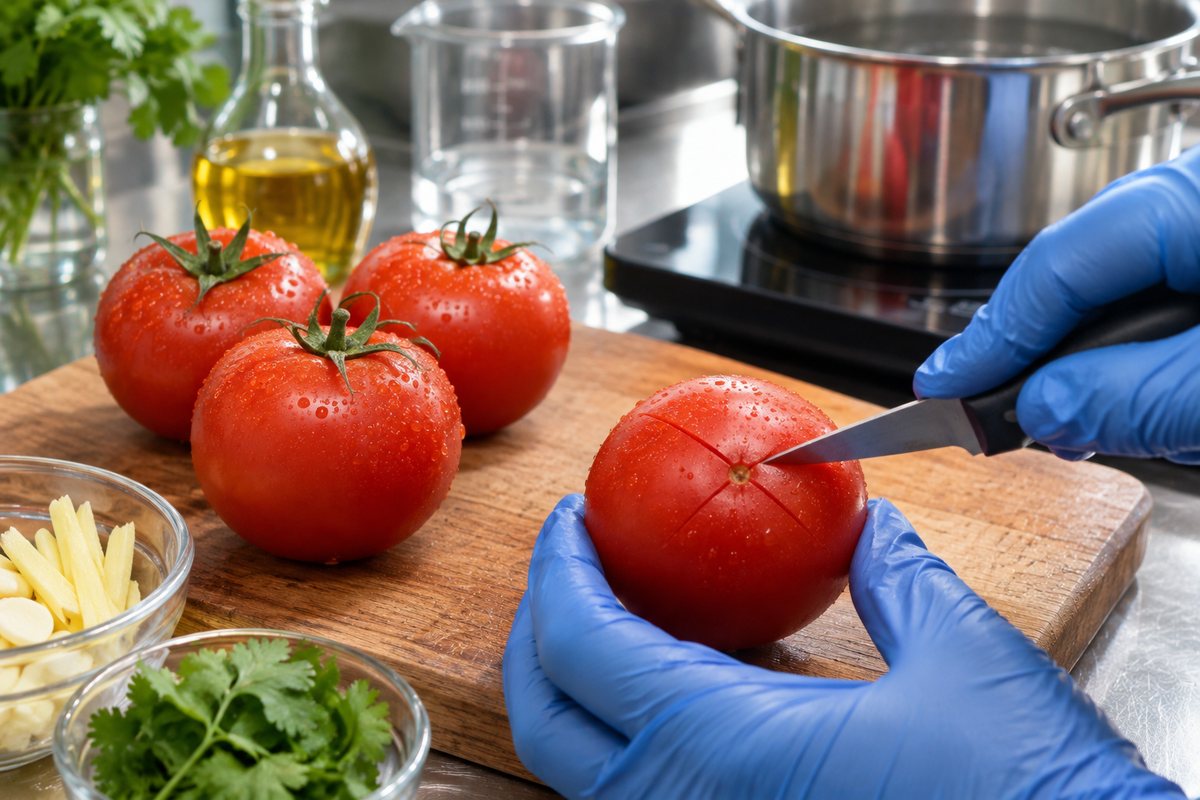
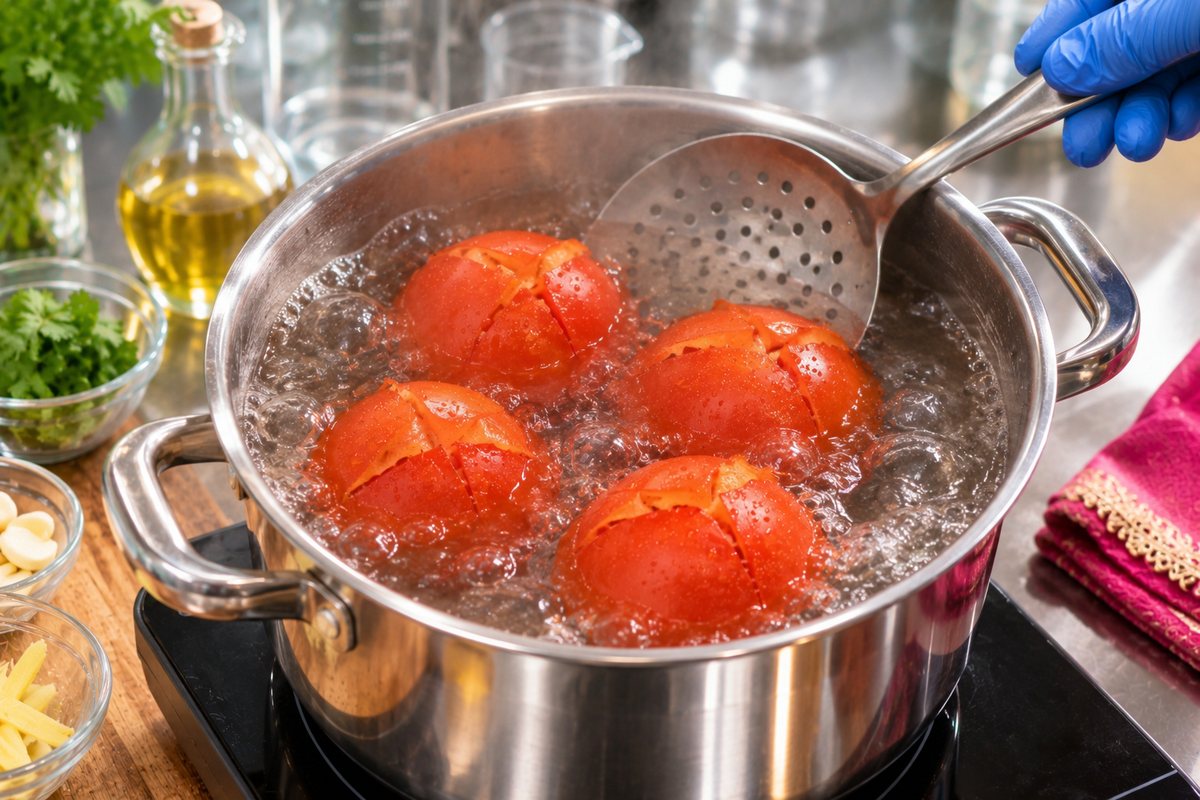
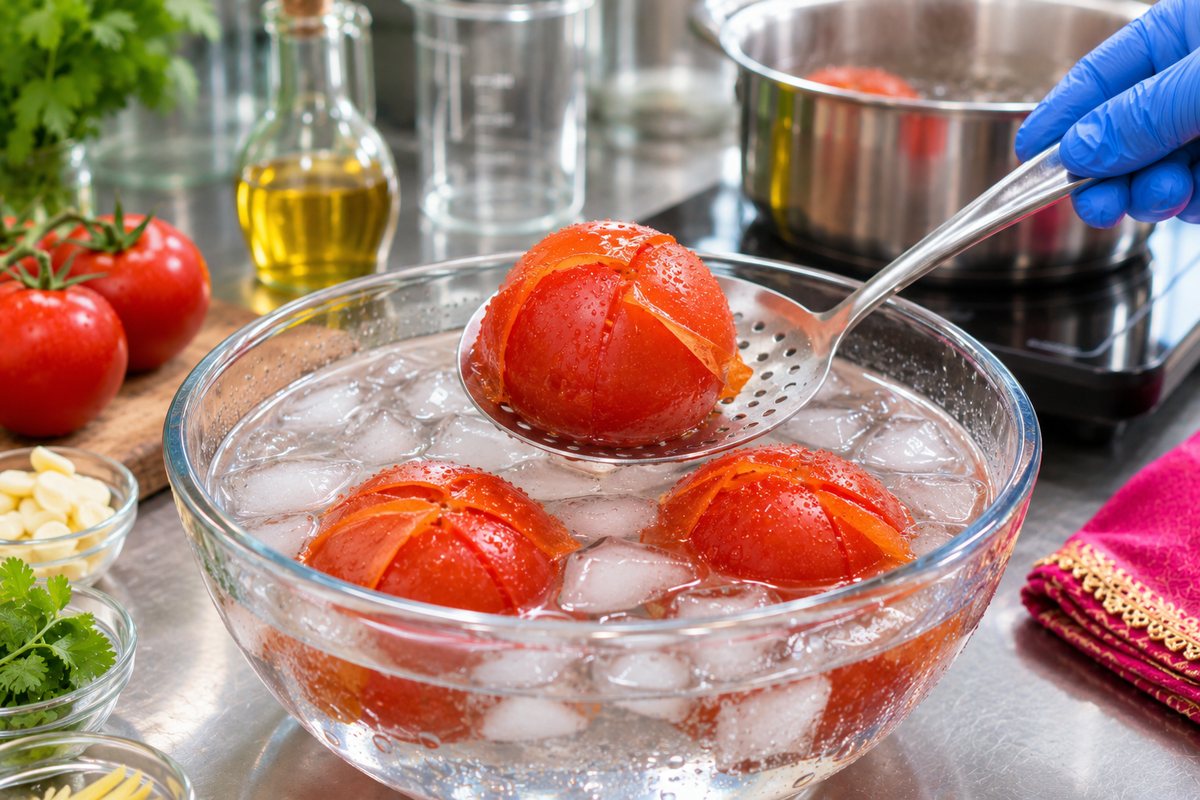
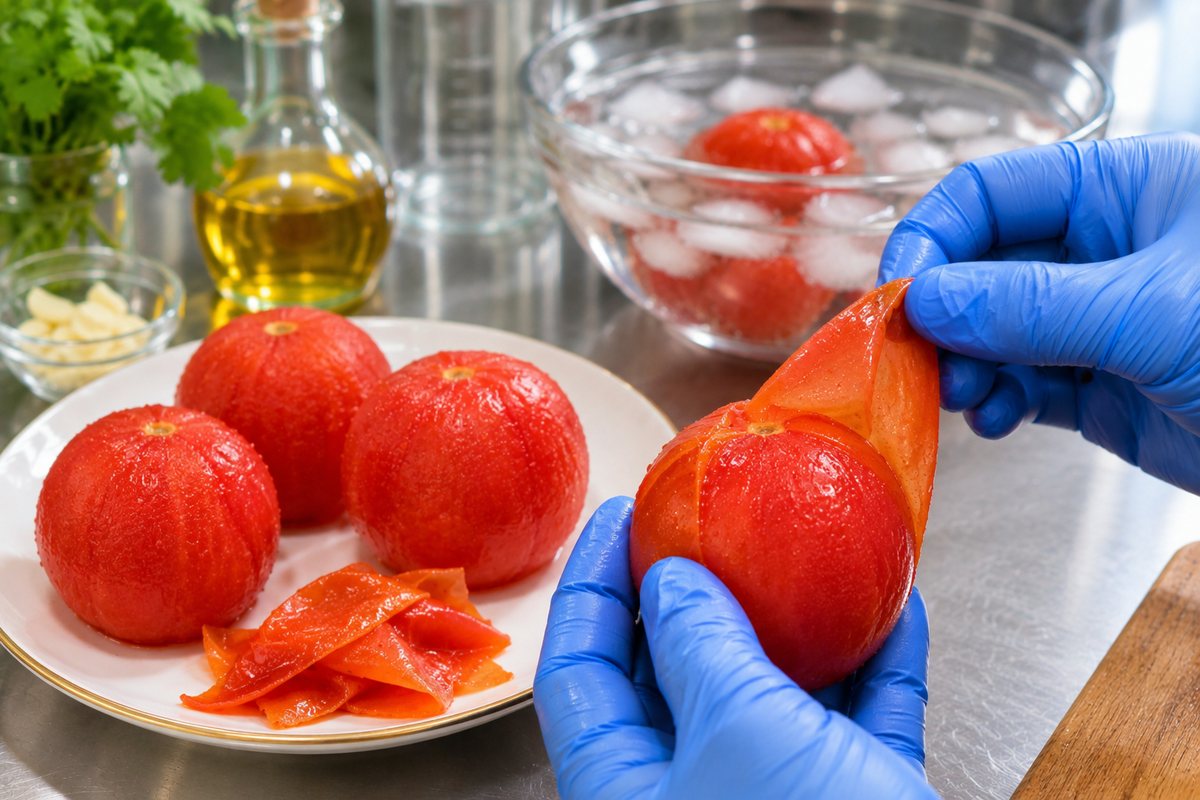
How to peel tomatoes, the food-science way

Score, blanch for 30–60 seconds, chill in ice water, and the skins slip right off. Peeled tomatoes cook into a smoother, silkier masala with no chewy flecks of skin.

  1. Scoring a shallow X on the bottom of a ripe tomato with a paring knife
    1. ScoreCut a shallow X through the skin on the bottom of each tomato.
  2. Scored tomatoes in boiling water with the skins starting to split at the X
    2. BlanchLower the tomatoes into rolling boiling water (a saucepan, or the Instant Pot on Sauté, More/High) for 30–60 seconds, just until the skin at the X starts to split.
  3. Blanched tomatoes going into an ice-water bath with their skins loosened
    3. ChillLift them straight into a bowl of ice water for about 1 minute.
  4. Slipping the loosened skin off a blanched tomato
    4. PeelStarting at the X, slip the skins off with your fingers. Cut out the core, then chop or blend.

Why peel at all?

Tomato skin is a tough, waxy layer that doesn’t break down with cooking; in a long-cooked masala it curls into chewy flecks. The skin is also where almost all of a tomato’s flavonoids sit, mainly naringenin chalcone and rutin, the kind of plant compounds that can taste faintly bitter or astringent. Texture is the bigger, better-proven reason, but peeled tomatoes give the smoothest, cleanest-tasting gravy.

Why the boiling water works

A short plunge heats only the outer layer. The heat weakens the pectin that glues the skin to the flesh, and steam forming underneath pushes the skin away, so it splits and curls back at the X while the flesh inside stays raw and firm.

Why the ice bath

Ice water stops the cooking at once, so the flesh doesn’t turn soft and mushy, and makes the tomatoes cool enough to peel right away. More than about a minute in the boiling water starts to cook the flesh.

Sources: National Center for Home Food Preservation: Put It Up! Boiling Water Canning · Muir et al., Nature Biotechnology (2001): flavonoids in tomato peel

How to make it, at a glance

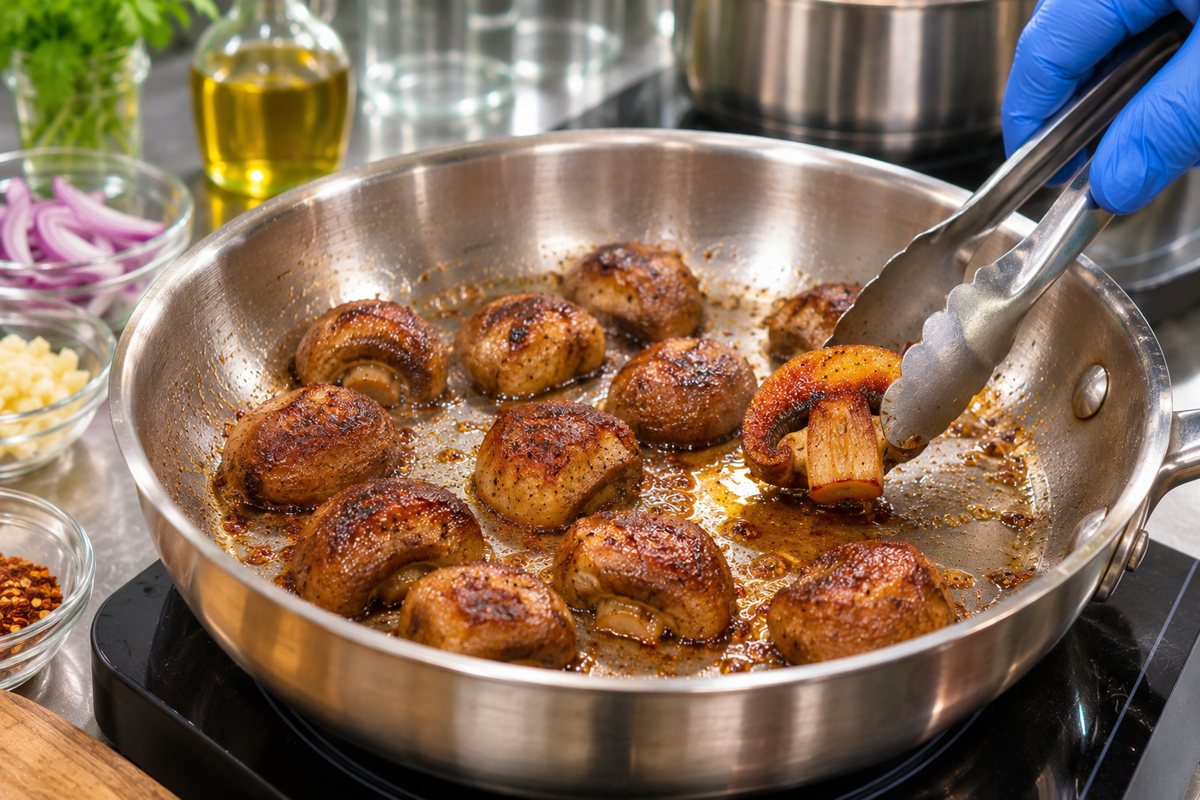
  1. Sear the mushroomsHeat the 2 tbsp oil in a large skillet over high heat. Add the mushrooms in a single layer, in batches if needed, and leave them alone for 3–4 minutes until browned underneath. Stir and cook until golden all over, 6–8 minutes per batch. Season lightly with salt and set aside with any juices.
    Mushroom halves searing cut side down in a single, uncrowded layer
  2. Prep the tomatoesScore, blanch and peel the tomatoes (see the step-by-step photos), then blend them into a smooth puree.
  3. Bloom the cumin, brown the onionsHeat the oil or ghee in a kadai or heavy pot over medium heat. Add the cumin seeds and let them sizzle for 20–30 seconds, then add the onions and cook, stirring often, until deep golden, 12–15 minutes.
  4. Add the ginger-garlic pasteStir in the ginger-garlic paste and cook for 1–2 minutes, until the raw smell is gone.
  5. Bloom the spicesAdd the salt, chili powder and turmeric, plus the ground coriander, ground cumin and shiitake powder (if using), and stir for 30–60 seconds.
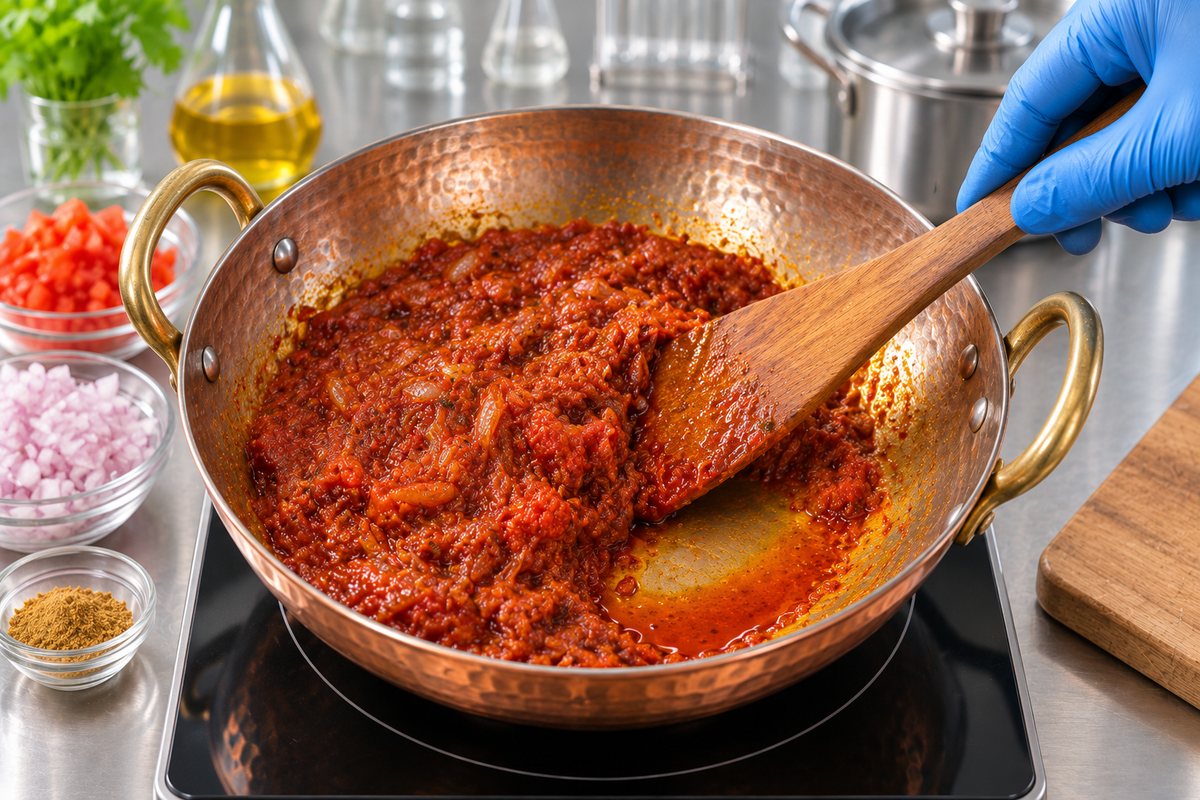
  6. Tomatoes, then garam masalaAdd the tomato puree and cook, stirring and scraping up any browned bits, until thick and the oil separates at the edges, 8–10 minutes. Stir in the garam masala.
    Onion-tomato masala cooked until the oil separates at the edges of the kadai
  7. Simmer the mushroomsAdd the seared mushrooms and their juices. Simmer uncovered for 5 minutes, adding a splash of water if the gravy gets too thick.
  8. Make it creamyWhisk the ricotta into the heavy cream until smooth. Turn the heat to low, stir it into the curry and heat gently for 2–3 minutes. Don’t let it boil.
  9. Finish and serveCrush the kasuri methi between your palms and stir it in. Taste for salt and serve with naan, roti or basmati rice.

Exact amounts and timings are in the recipe card below.

Health & nutrition

Health benefits, honestly rated

What this dish brings to the table, with an honest rating of how strong the evidence is.

Macros per serving

Calories370
Protein11 g
Carbs22 g
Fat29 g
Fiber4 g
Sodium930 mg

3.0 g protein per 100 calories. Estimated from the ingredients with USDA FoodData Central values.

Gym-friendly tip: Add 150 g cubed paneer or a side of ¾ cup Greek yogurt raita (about +16 g protein), or serve with dal.

Well established

Low in calories, big on savory flavor

Mushrooms are mostly water and very low in calories, yet their natural glutamates give the curry a meaty depth without any meat.

Well established

A possible source of vitamin D

Mushrooms exposed to UV light make vitamin D. Regular cremini contain very little, but packs labeled “high in vitamin D” can supply a large share of daily needs. Few plant foods offer this.

Well established

Calcium and protein from ricotta

Ricotta and cream add calcium and protein; dairy foods are the main source of calcium in most diets.

Limited evidence

Turmeric with black pepper and fat

Curcumin, turmeric’s golden pigment, is poorly absorbed on its own. It dissolves in fat, and black pepper’s piperine raised its absorption in a small 1998 study. NIH says turmeric’s effects on health in people are still uncertain, so enjoy it for flavor and color rather than as a remedy.

Keep in mind

  • Heavy cream and ricotta add saturated fat. For a lighter curry, halve the cream and add a little more ricotta.
  • Contains dairy.

General nutrition information, not medical advice. Numbers marked “estimated” are calculated from the recipe’s ingredients and vary with brands and portions. If you have diabetes, heart or kidney disease, a food allergy, or are pregnant, ask your doctor or a registered dietitian how this dish fits your diet.

Fits these health goals: Bone health and osteoporosis (general guidance, not medical advice)

Health sources: Cardwell et al., mushrooms as a source of vitamin D (Nutrients, 2018) · NIH Office of Dietary Supplements: Vitamin D · NIH Office of Dietary Supplements: Calcium · NIH NCCIH: Turmeric · Shoba et al., piperine and curcumin absorption (Planta Medica, 1998) · Dietary Guidelines for Americans

Questions, answered

Is mushroom masala vegan?

Not this version, which uses ricotta and cream. For vegan, finish with cashew cream or coconut milk and use oil instead of ghee.

Can I make mushroom masala dry?

Yes: skip the ricotta and cream and cook the masala down until it clings to the mushrooms.

Which mushrooms are best?

Cremini (baby bella) mushrooms have the best balance of flavor and firm texture. Mixing in shiitake or oyster mushrooms adds even more savory depth. White button mushrooms work but taste milder.

How do I make it taste even more like meat?

Brown the mushrooms hard and don’t crowd the pan, keep the browned bits in the pot, and add the optional dried shiitake powder. Those three steps do the most for a deep, meaty flavor.

Why did my sauce turn grainy?

The dairy got too hot or was too low in fat. Stir the ricotta and cream in over low heat, don’t let the curry boil afterward, and use whole-milk ricotta and heavy cream.

Can I use paneer instead of ricotta?

Yes. Cubes of paneer hold their shape instead of melting into the sauce, so you get a different but equally good texture. Add them with the mushrooms.

Is this curry vegetarian?

Yes. It’s vegetarian, but not vegan, because of the ricotta, heavy cream and ghee.

About MedRise Food Science

Desi restaurant favorites, recreated at home and explained with food science: every recipe is tested in a home kitchen and comes with the why behind each step.

Meal prep

Meal prep: feeding 4 for the week

How much to make, based on 4 people eating it once a day. One batch of this recipe makes 4 servings.

Tonight1× the recipe4 servingsHeavy cream: ½ cupOne batch is enough.
Days 1–44× the recipe16 servings, kept in the fridgeHeavy cream: 2 cups
Days 1–7, the whole week7× the recipe28 servings: fridge for the first days, freezer for the restHeavy cream: 1 quart (you need 3½ cups)
  1. Cook onceOn prep day, make the recipe at 7× (use the button above to scale every amount). Big pots take longer to come to a boil and to reduce, so allow extra time; an Instant Pot should be filled no more than halfway for beans and lentils, or two-thirds for other dishes, so cook in rounds if needed.
  2. Cool it fastDivide the food into shallow containers so it cools quickly, and refrigerate within 2 hours of cooking.
  3. Split fridge and freezerKeep days 1–4 in the fridge. Freeze the rest in single-meal portions labeled with the date.
  4. Thaw the night beforeMove the next day’s portion from the freezer to the fridge the night before. Reheat until steaming hot all the way through (165°F / 74°C).
Fridge
Up to 4 days
Freezer
Freezes for 2–3 months, but freeze it before the ricotta and cream go in.
Milk and cream for the whole week
Heavy cream: 1 quart (you need 3½ cups)
Keep separate or add fresh
Keep the dairy out of any portions you plan to freeze: dairy sauces can turn grainy after freezing. Stir the ricotta-cream in when you reheat.
Reheat
Reheat gently over low heat until steaming hot. Whisk in the ricotta and cream at the end and don’t let it boil.

Why only a few days in the fridge? Refrigeration slows bacteria but doesn’t stop them; some, like Listeria, can still grow at fridge temperatures, which is why food-safety agencies set cooked leftovers at 3–4 days. Freezing at 0°F stops growth completely, so frozen portions stay safe indefinitely; the freezer times above are for best taste and texture.

Food-safety guidance: USDA, Leftovers and Food Safety · FoodSafety.gov storage chart

Sources & further reading