Whole-wheat flour (atta)
आटाآٹا
āṭā
Finely ground whole-wheat chapati flour.
Its job: The body of the pancake.
Also called Meetha Puda · Sawan de Pude · Gur Saunf ke Pude · मीठे पूड़े · میٹھے پوڑے
Thin whole-wheat pancakes sweetened with sugar or jaggery, scented with fennel and cooked in ghee until the edges turn crisp and lacy. The Sawan classic, made to eat with kheer while it rains.
Meethe pude (meetha pura) are Punjabi sweet pancakes of atta, sugar or jaggery and fennel seeds, cooked in ghee until lacy, the rainy-season Sawan treat traditionally eaten with kheer.
 From the MedRise Food Science kitchenPublished
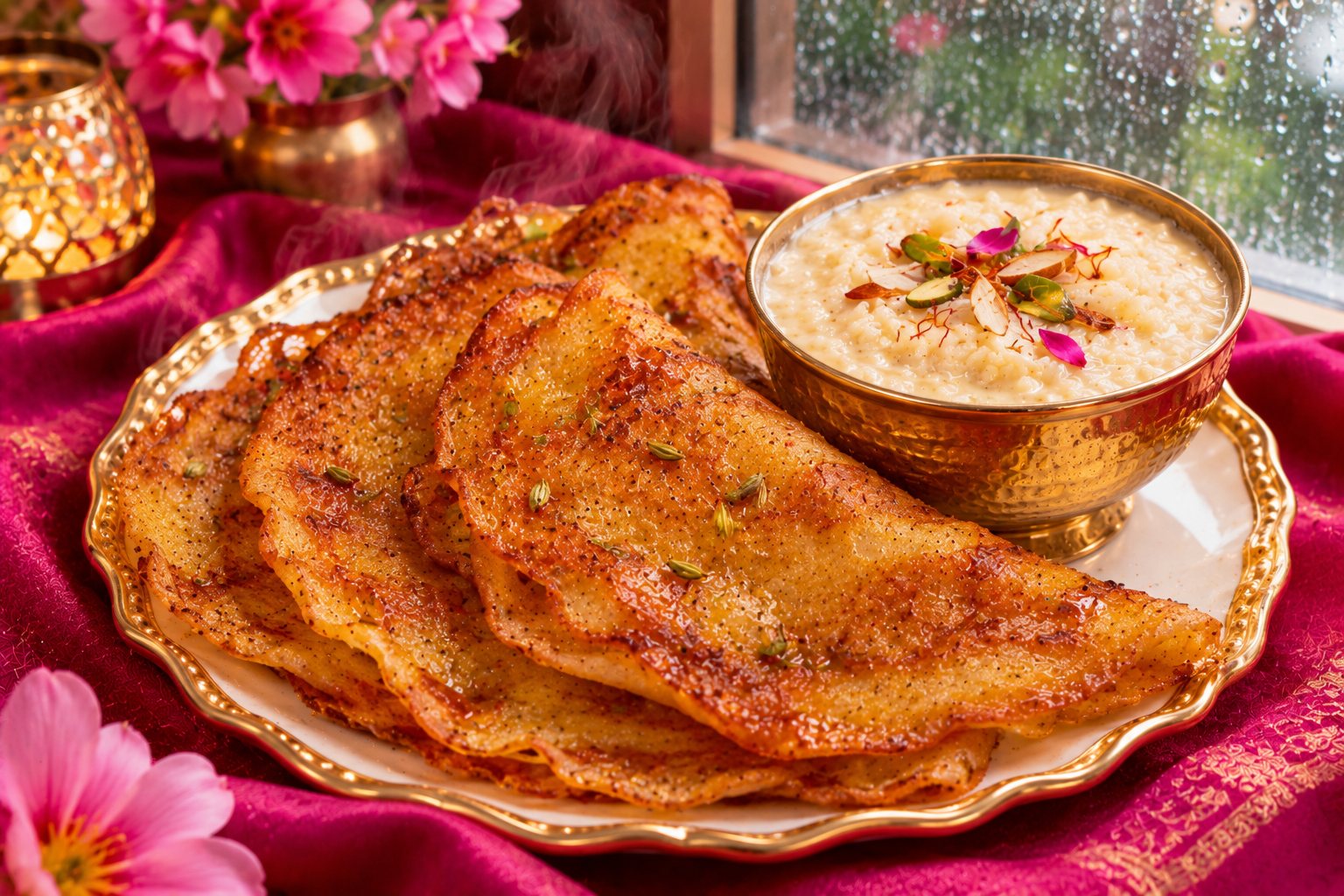
Meethe pude (also called meetha pura or meetha puda) are thin, sweet Punjabi pancakes made from whole-wheat atta, sugar or jaggery and fennel seeds, cooked in ghee on a tawa until the edges turn crisp and lacy.
They’re a rainy-season tradition. In the monsoon month of Sawan, Punjabi homes make kheer and pude, especially around Teeyan, the season’s women’s festival of swings, giddha and folk songs.
The main ingredients, with their English, Hindi and Urdu names.
Finely ground whole-wheat chapati flour.
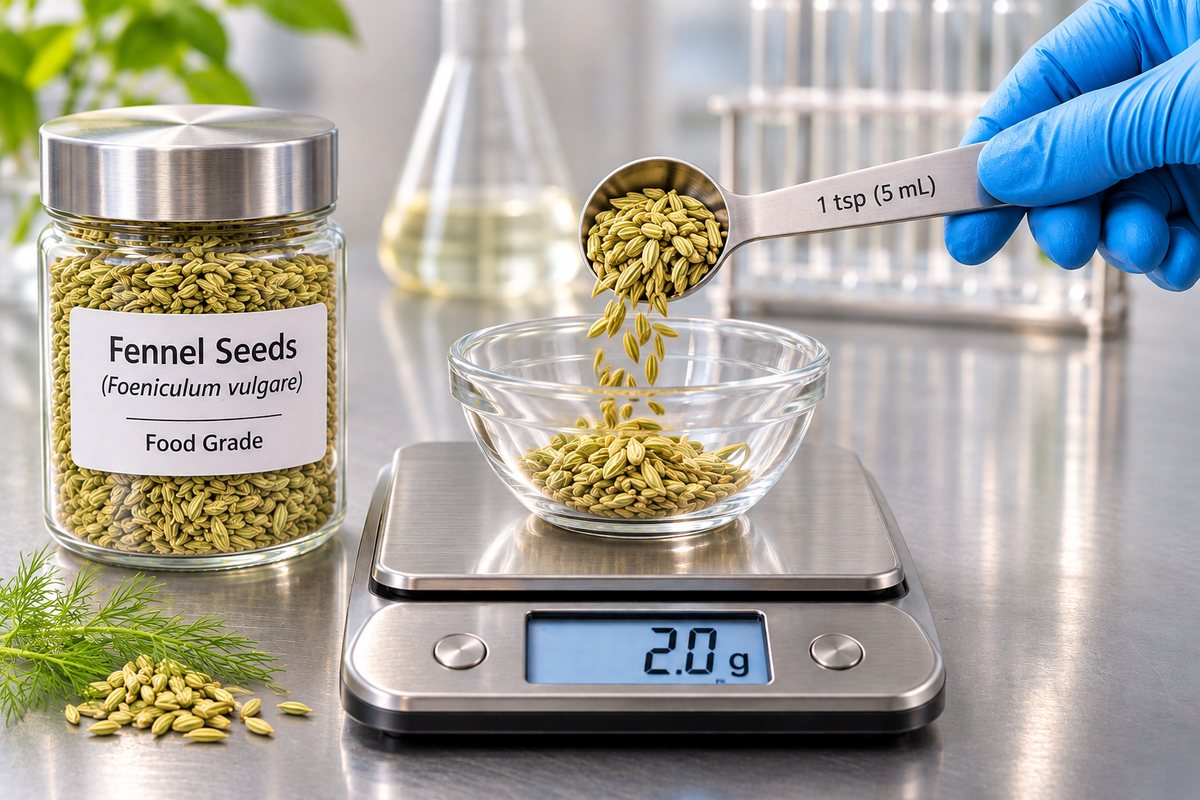
Lightly crushed.
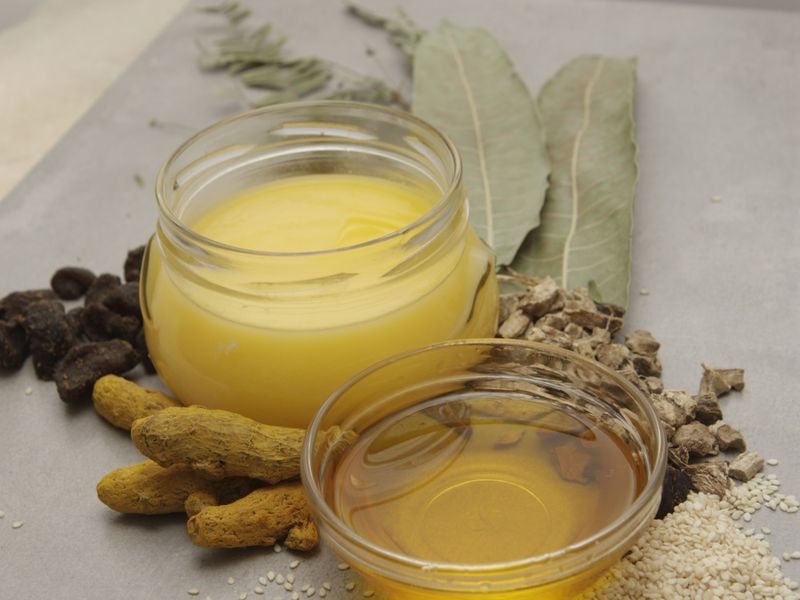
Clarified butter.
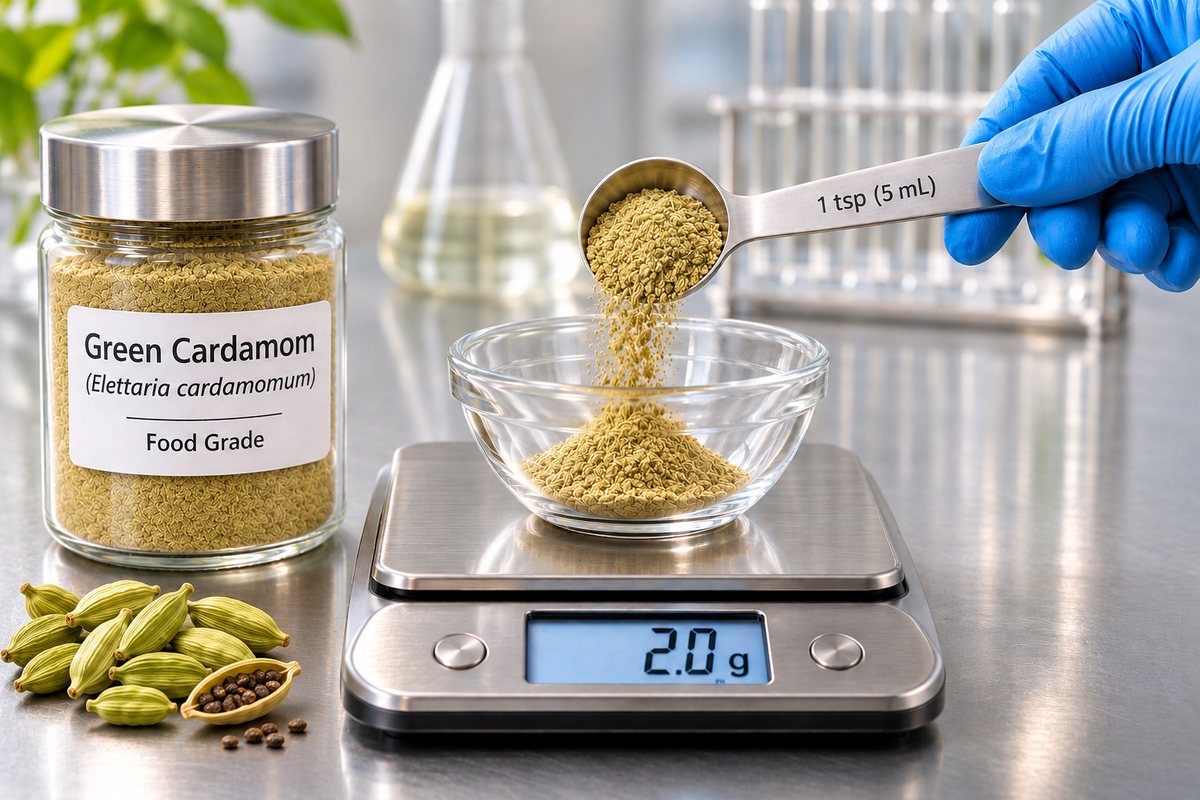
Ground, optional.
Restaurant cooks do these things by habit. Here’s what each step is actually doing to the food, so you can cook by understanding instead of guesswork.
Rest the batter for 30 minutes.
Whole-wheat flour hydrates slowly because of its bran. Resting gives the bran and starch time to absorb water, so the batter thickens slightly and cooks into a tender, even pancake instead of a gritty one, and the gluten formed while whisking relaxes so the pude stay soft.
Cook over medium heat.
Sugar in the batter caramelizes, and the flour browns through the Maillard reaction; sugar speeds both up. On high heat the outside burns before the center sets.
Spread the batter thin and drizzle ghee around the edge.
Where the batter is thinnest, its water flashes off fast in the hot ghee and leaves a crisp, lacy web, while the thicker center stays soft.
Use jaggery for a deeper, caramel-like flavor.
Jaggery is unrefined cane sugar that keeps some of the molasses, so it tastes of caramel and browns more readily. Nutritionally it’s still sugar, not a meaningfully healthier swap.
Lightly crush the fennel seeds before adding them.
Cracking the seeds releases anethole, the compound behind fennel’s sweet, licorice-like aroma, into the batter as it cooks.
Exact amounts and timings are in the recipe card below.
A seasonal sweet, best as an occasional treat.
1.7 g protein per 100 calories. Estimated from the ingredients with USDA FoodData Central values.
Gym-friendly tip: Treat-sized. For more protein, serve with a cup of milk (+8 g) or Greek yogurt.
Atta is a whole grain, so it brings more fiber than pancakes made with maida.
General nutrition information, not medical advice. Numbers marked “estimated” are calculated from the recipe’s ingredients and vary with brands and portions. If you have diabetes, heart or kidney disease, a food allergy, or are pregnant, ask your doctor or a registered dietitian how this dish fits your diet.
Health sources: Dietary Guidelines for Americans
See the full ingredient health guide: benefits, traditional roots and the science →
Yes. Dissolve it in the water first and strain; the pude will be darker and more caramel-flavored.
The tawa isn’t hot enough or needs more ghee. Wait until a drop of batter sizzles.
Traditionally in Sawan, the monsoon month, with kheer, and especially for Teeyan. Many families also make them on any rainy day.
Desi restaurant favorites, recreated at home and explained with food science: every recipe is tested in a home kitchen and comes with the why behind each step.
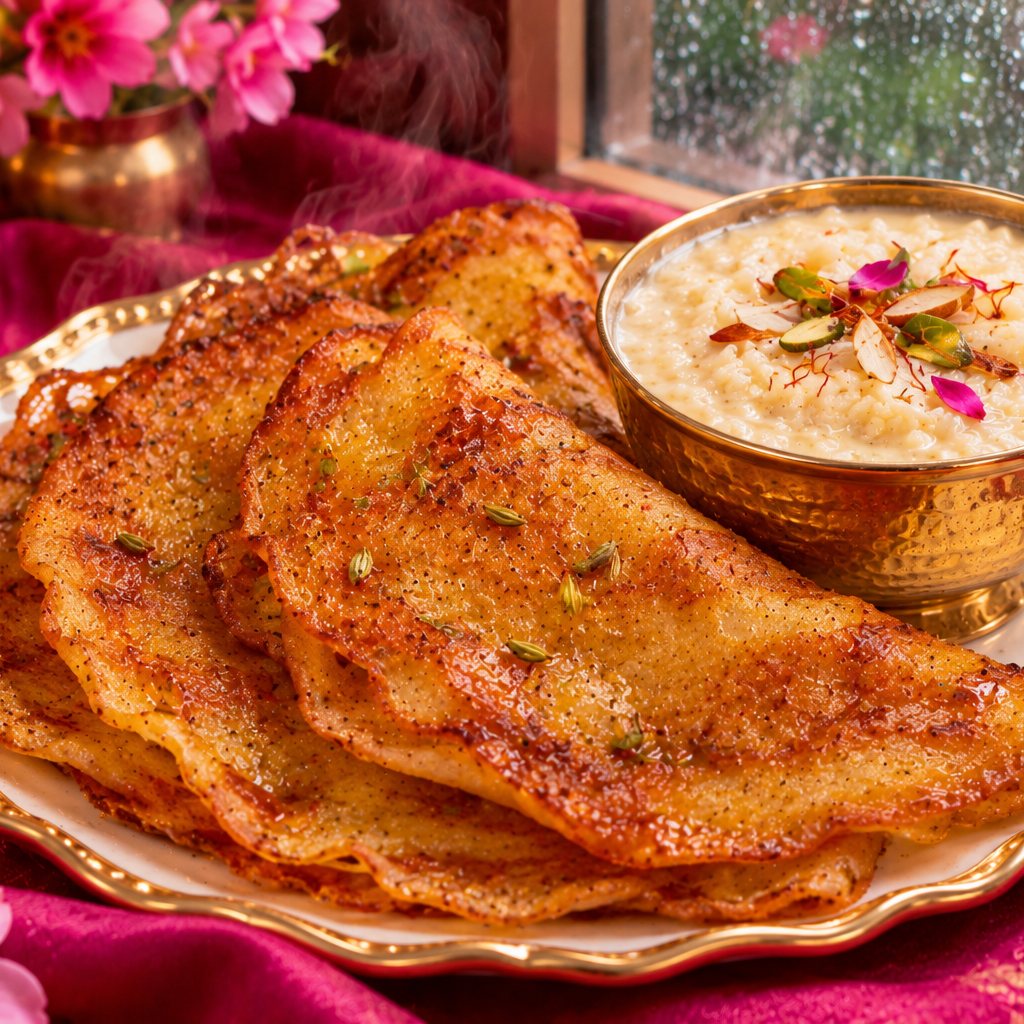
Punjabi meethe pude (meetha pura): thin, lacy whole-wheat pancakes sweetened with sugar or jaggery and scented with fennel, made in the rainy month of Sawan and served with kheer. With the food science of resting the batter and getting crisp, lacy edges.
How much to make, based on 4 people eating it once a day. One batch of this recipe makes 8 pude (4 servings).
Why only a few days in the fridge? Refrigeration slows bacteria but doesn’t stop them; some, like Listeria, can still grow at fridge temperatures, which is why food-safety agencies set cooked leftovers at 3–4 days. Freezing at 0°F stops growth completely, so frozen portions stay safe indefinitely; the freezer times above are for best taste and texture.
Food-safety guidance: USDA, Leftovers and Food Safety · FoodSafety.gov storage chart