Paneer
पनीरپنیر
panīr
Firm, full-fat block.
Its job: Holds its shape on skewers.
Also called Green Paneer Tikka · Hara Paneer · हरियाली पनीर टिक्का · ہریالی پنیر تکہ
Paneer cubes, onion and peppers coated in a mint, cilantro and spinach yogurt marinade, then air-fried or grilled until charred.
Hariyali paneer tikka is paneer in a green mint, cilantro and spinach yogurt marinade, air-fried or grilled until charred.
 From the MedRise Food Science kitchenPublished
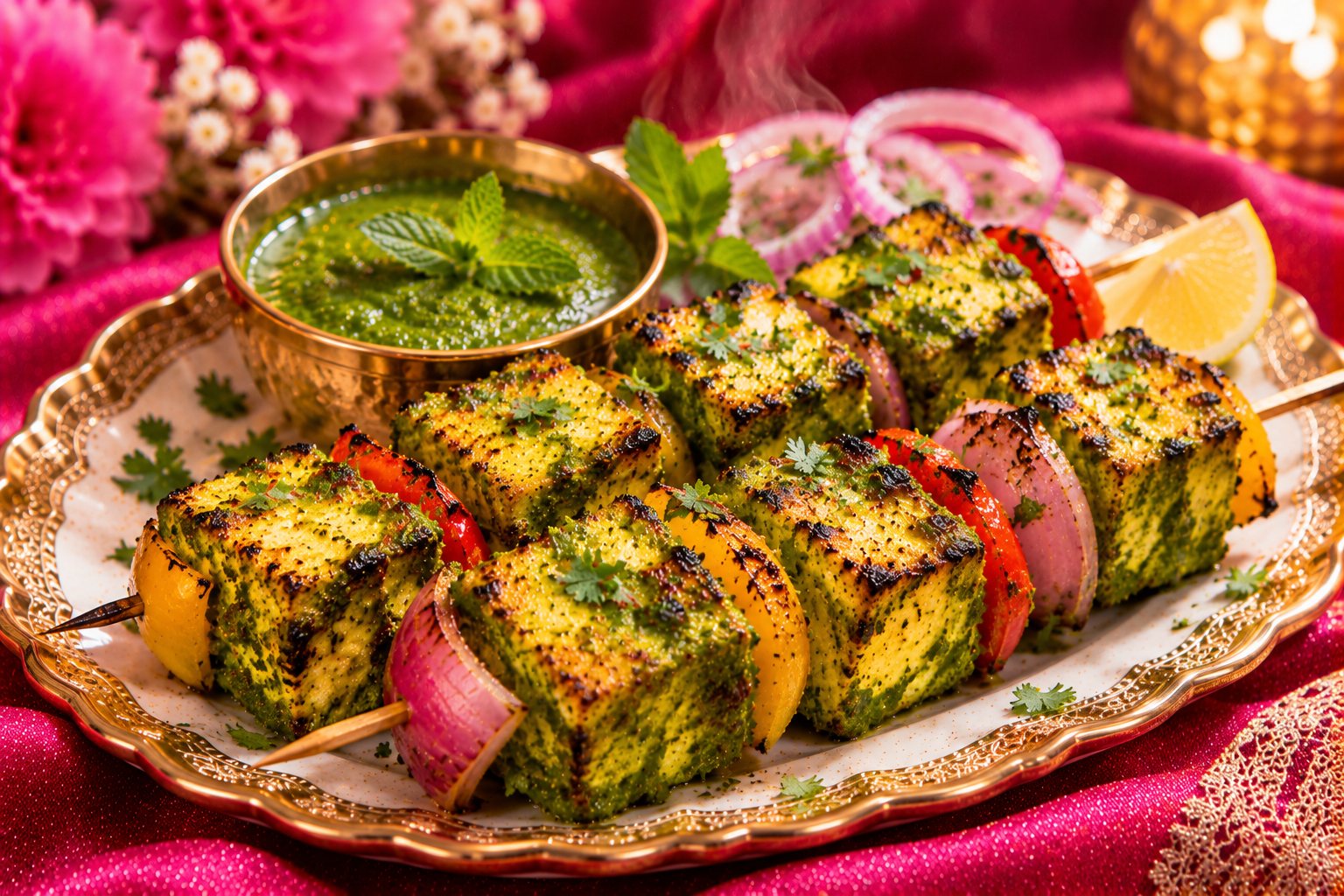
Hariyali means “greenery.” Hariyali paneer tikka swaps the red tandoori marinade for a green paste of mint, cilantro and spinach.
The main ingredients, with their English, Hindi and Urdu names.
Firm, full-fat block.
Fresh, with tender stems.
Chickpea flour, dry-roasted.
Grow it yourself: Green chilies, Bell peppers (capsicum), Cilantro (dhania), Mint (pudina), Methi (fenugreek), Garlic, Ginger
Restaurant cooks do these things by habit. Here’s what each step is actually doing to the food, so you can cook by understanding instead of guesswork.
Stir the lemon juice in just before cooking.
Chlorophyll turns olive-drab in acid over time; adding lemon at the end keeps the color bright.
Dry-roast the besan until it smells nutty.
Roasting removes the raw, beany taste and dries the flour so it soaks up moisture and holds the marinade on the paneer.
Cook hot and fast.
Paneer is set with acid, which leaves its casein proteins tightly bound, so it softens and browns but doesn’t melt like aged cheese.
Exact amounts and timings are in the recipe card below.
Vegetarian protein with herbs and vegetables.
5.4 g protein per 100 calories. Estimated from the ingredients with USDA FoodData Central values.
Gym-friendly tip: Already high in protein. For a leaner plate, serve with salad and roti instead of rice, and use skinless thighs or breast.
Paneer and yogurt supply both; about 22 g protein per serving (estimated).
General nutrition information, not medical advice. Numbers marked “estimated” are calculated from the recipe’s ingredients and vary with brands and portions. If you have diabetes, heart or kidney disease, a food allergy, or are pregnant, ask your doctor or a registered dietitian how this dish fits your diet.
Health sources: Khan & Pal, Paneer production: a review (J Food Sci Technol) · NIH Office of Dietary Supplements: Calcium
See the full ingredient health guide: benefits, traditional roots and the science →
Yes, with care: see the substitution note for safety and salt.
Yes; use more cilantro. Spinach just deepens the color.
Desi restaurant favorites, recreated at home and explained with food science: every recipe is tested in a home kitchen and comes with the why behind each step.
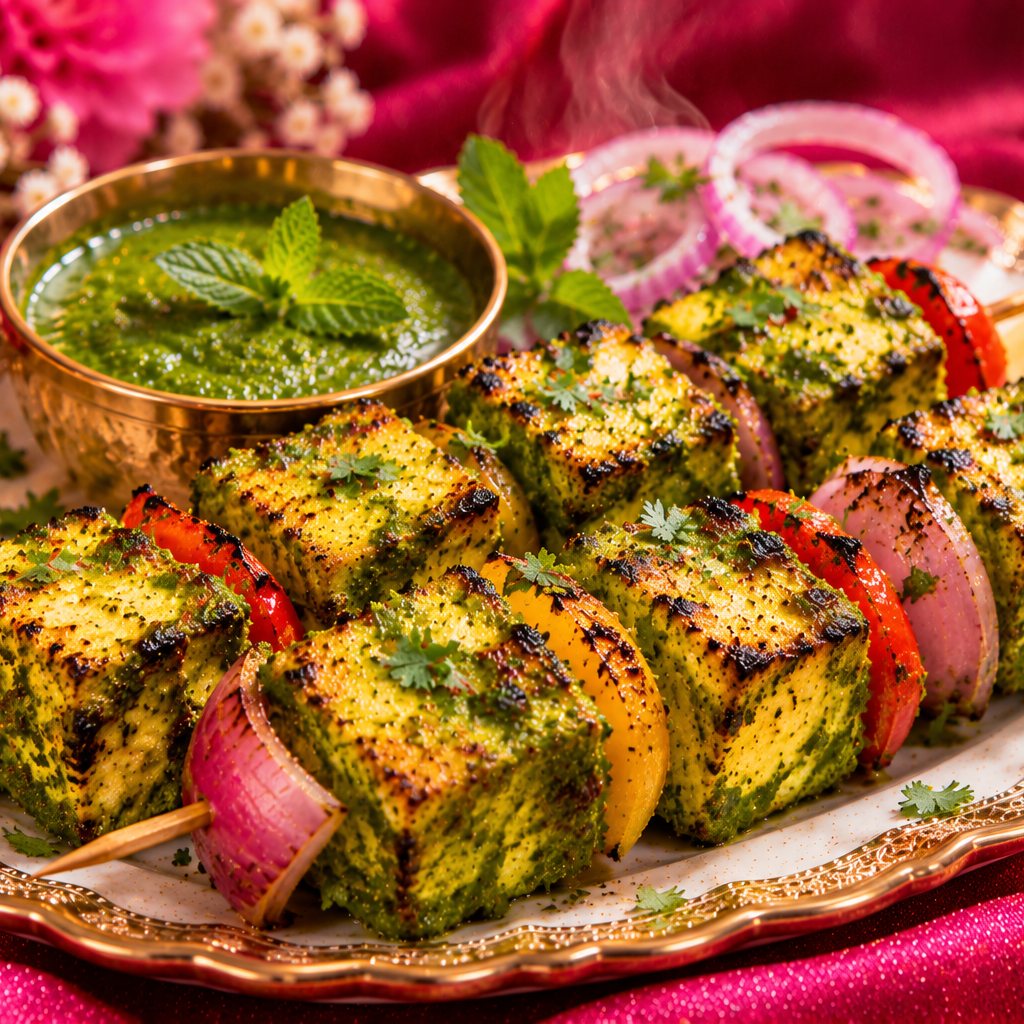
Hariyali paneer tikka: paneer, onion and peppers in a bright green mint, cilantro and spinach marinade with hung yogurt and roasted besan, air-fried until charred. With the science of keeping it green.