All-purpose flour (maida)
मैदाمیدہ
maidā
Plain white wheat flour, sold as “all-purpose flour” in the US.
Its job: Makes a soft, stretchy dough that rolls paper-thin.
Also called Chicken Dumplings · Chicken Momo · चिकन मोमोज़ · چکن مومو
Minced chicken or turkey with onion, spring onion, ginger, garlic, green chili and cilantro, wrapped in thin discs of soft maida dough, sealed and steamed until juicy. Served with a bright red momo chutney, and the science of why it all works.
Chicken momos are Himalayan steamed dumplings filled with juicy minced chicken (or turkey), ginger, garlic and spring onion, served with fiery red momo chutney. Six steamed momos have about 480 calories and 28 g of protein.
 From the MedRise Food Science kitchenPublished
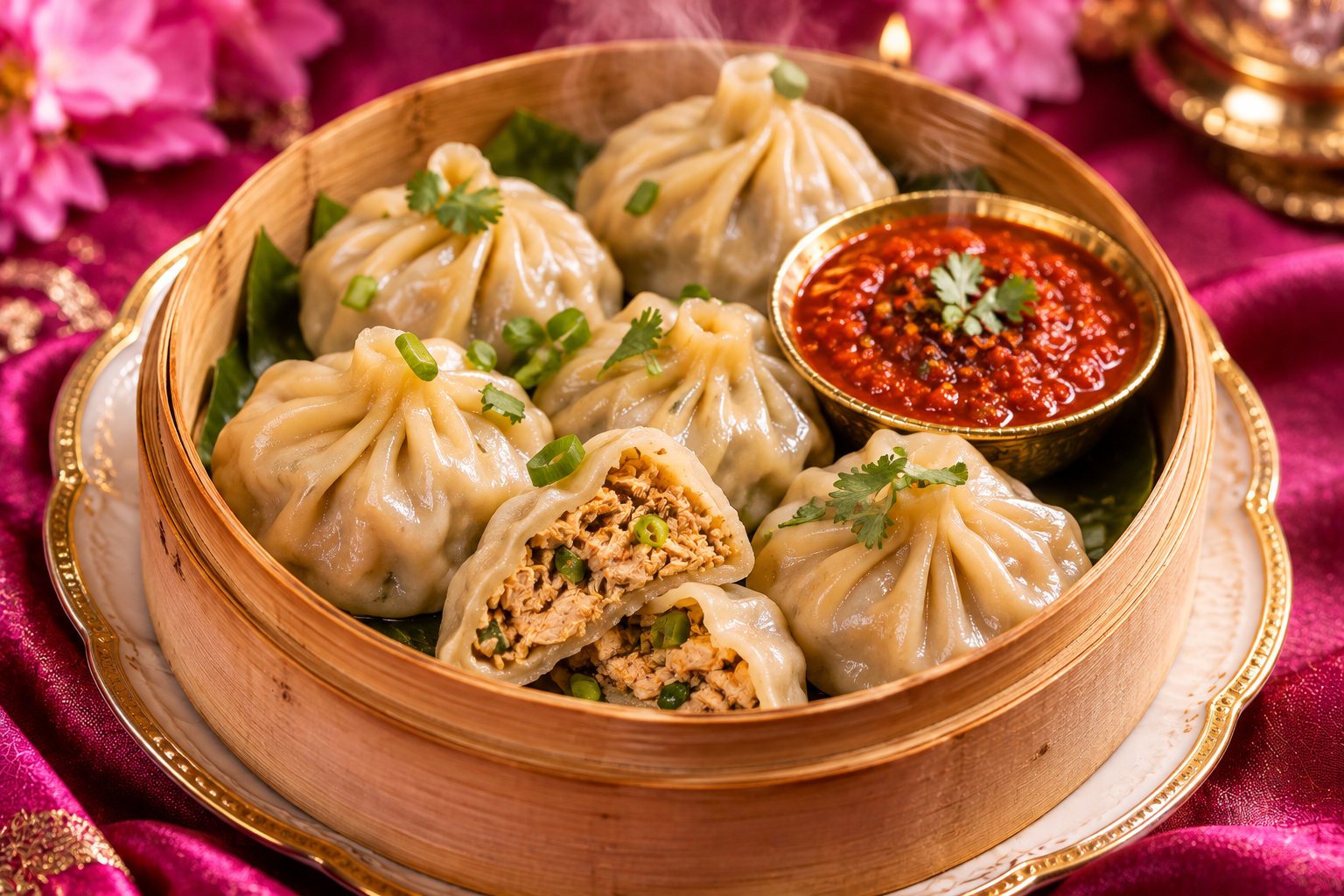
Momos are steamed dumplings from Tibet and Nepal that have become one of the most-loved street foods across North India, from Delhi to Darjeeling. A soft wheat-flour dough is rolled into small discs, filled, pleated shut and steamed.
This version uses minced chicken or turkey with onion, spring onion, ginger, garlic, green chili, cilantro and a little soy sauce, the classic street-style seasoning. Want more flavor? Turn the same steamed momos into tandoori momos or chili garlic momos.
The main ingredients, with their English, Hindi and Urdu names.
Plain white wheat flour, sold as “all-purpose flour” in the US.
Ground chicken or turkey. Thigh meat (or a 93% lean blend) stays juicier than all-breast.
Also called scallions or green onions.
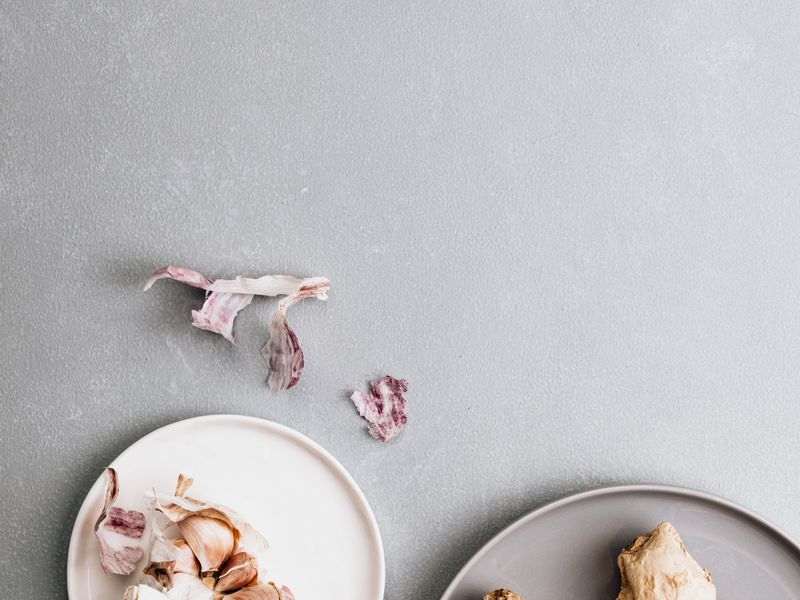
Fresh, finely grated or minced.
Fresh green chilies such as serrano or Indian green chilies.
Regular or light soy sauce.
Grow it yourself: Tomatoes, Green chilies, Cilantro (dhania), Spring onions, Garlic, Ginger
Restaurant cooks do these things by habit. Here’s what each step is actually doing to the food, so you can cook by understanding instead of guesswork.
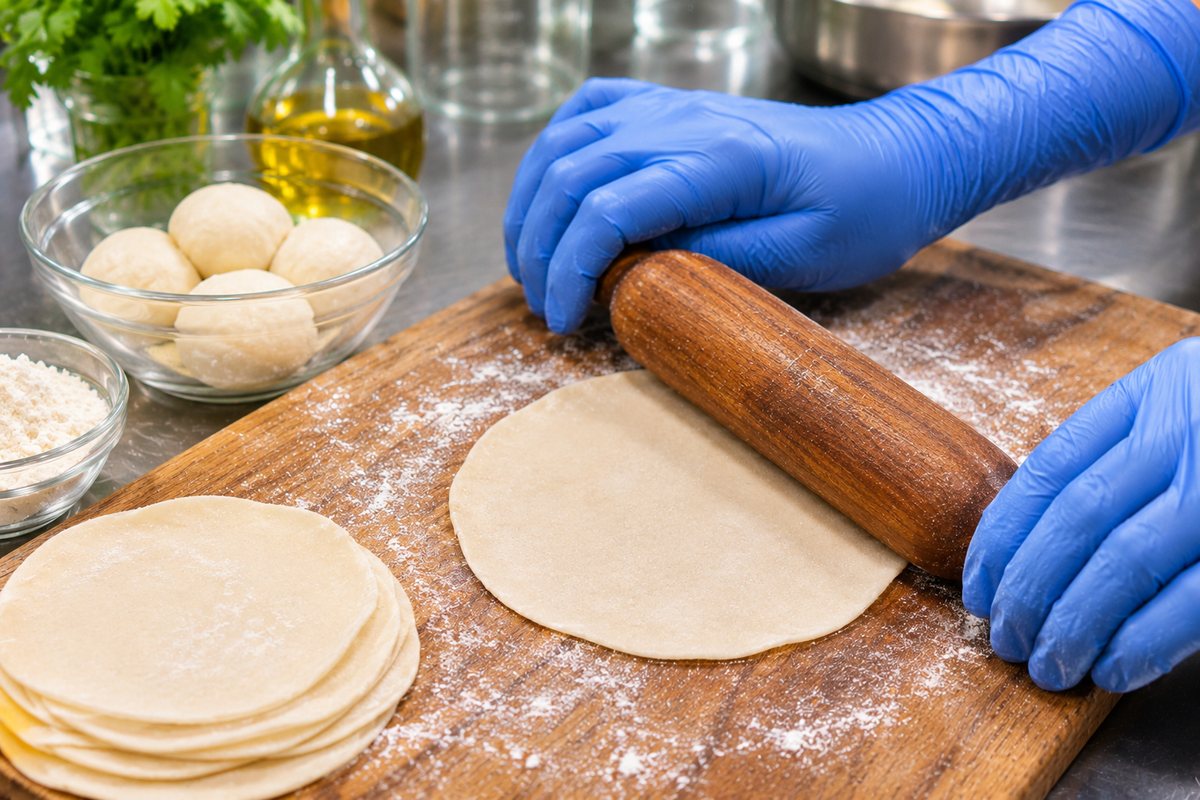
Knead the dough until smooth, then cover and rest it for 30 minutes.
Kneading builds gluten, the stretchy protein network in wheat dough. Right after kneading, that network is tight and springs back when you roll it. Resting lets it relax and lets the flour finish absorbing water, so the dough rolls thin without shrinking or tearing.
Roll each disc thin at the edges and slightly thicker in the middle.
The edges get pleated and doubled over, so they need to start thin or they turn doughy. The center sits under the filling and holds the juices, so a little extra thickness there keeps the bottom from tearing.
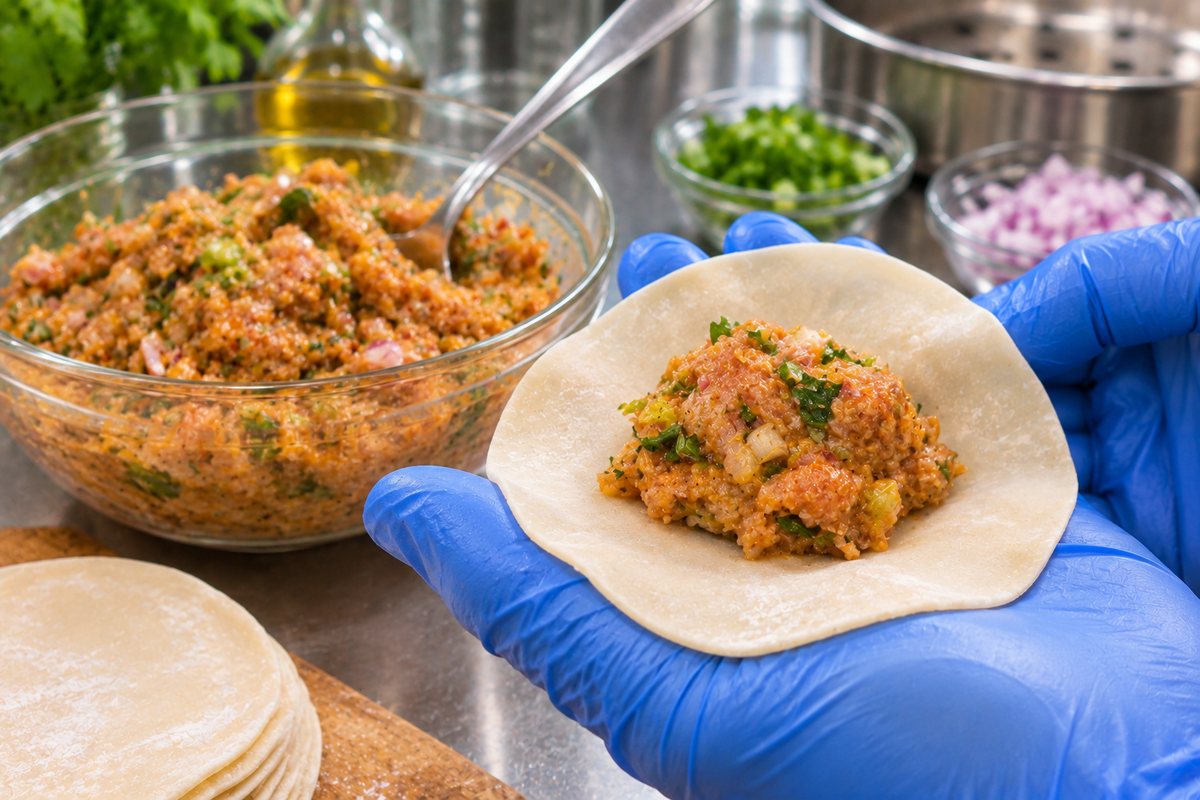
Mix the mince with the salt, soy sauce, oil and cold water until it turns slightly sticky.
Salt draws out sticky muscle proteins (myosin) from the meat. When you mix until the filling feels tacky, those proteins form a light gel that binds the filling and traps water and fat, the same trick sausage makers use. As the momo steams, that gel sets around the juices instead of letting them run out.
Steam the momos over boiling water in an oiled steamer, not in the water.
Steam surrounds the momos at about 212°F (100°C) without agitating them, so delicate pleats stay intact. The starch in the wrapper absorbs moisture and gelatinizes, which is why cooked momos look glossy and slightly translucent. Boiling would soak the dough and could split the seams.
Steam for 12–15 minutes, until the filling reaches 165°F (74°C).
Ground poultry must reach 165°F to be safe, because grinding spreads surface bacteria through the meat. A cut-open momo should show no pink and the juices should run clear; an instant-read thermometer in the center of one momo is the surest check.
Boil the tomatoes, dried chilies, garlic and ginger, then blend with vinegar, sugar and soy sauce.
Boiling softens the tomatoes and rehydrates the dried chilies so they blend smooth. Dried Kashmiri chilies give a deep red color with moderate heat; the vinegar’s acid and a little sugar balance the heat so the chutney tastes bright rather than just hot.
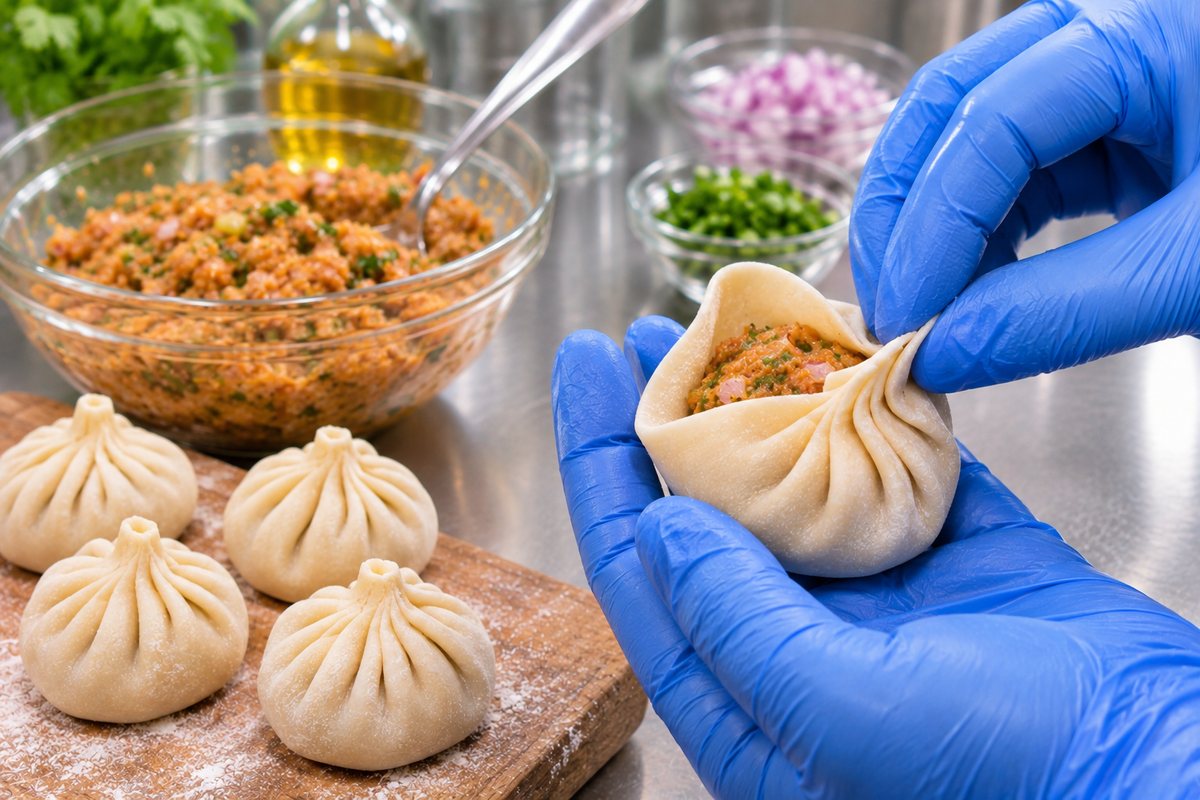
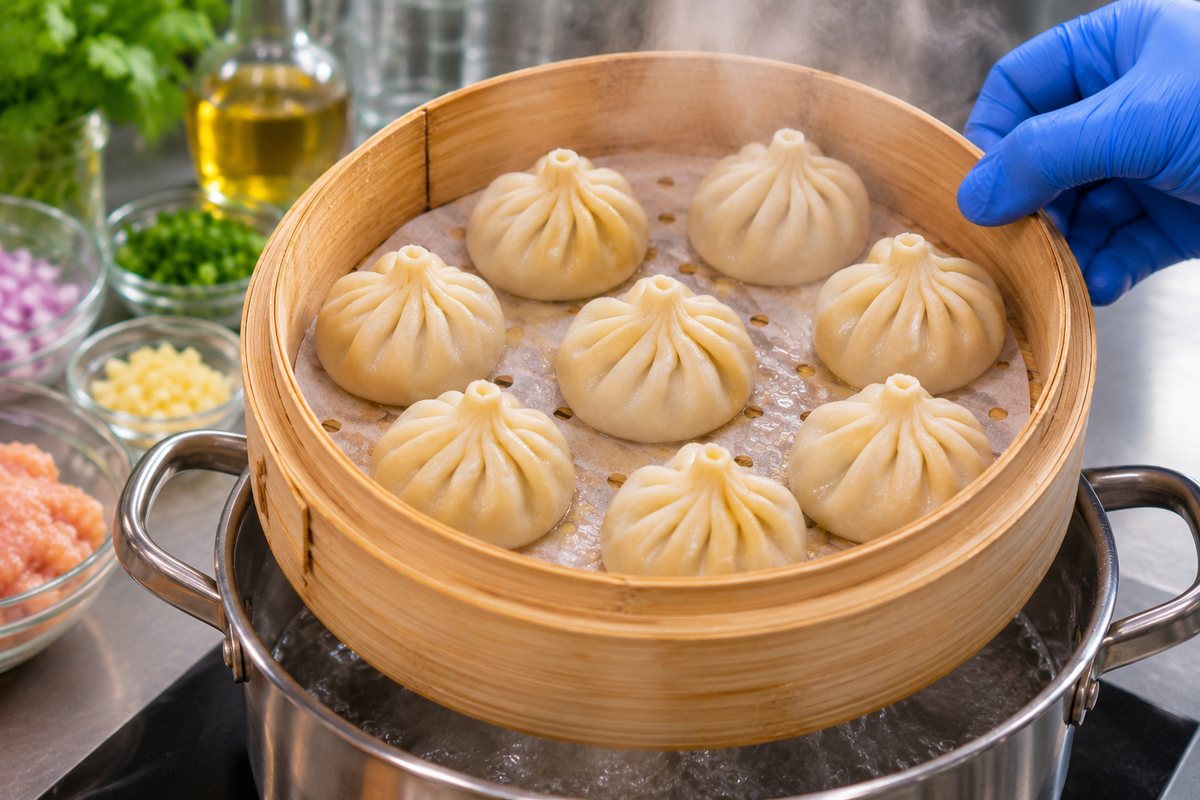
Exact amounts and timings are in the recipe card below.
What this dish brings to the table, with an honest rating of how strong the evidence is.
5.8 g protein per 100 calories. Estimated from the ingredients with USDA FoodData Central values.
Gym-friendly tip: Already high in protein. For a leaner plate, serve with salad and roti instead of rice, and use skinless thighs or breast.
A serving of 6 momos has roughly 28 g of protein and about 480 calories (estimated), most of the protein from the chicken or turkey.
Steaming adds no fat at all; the little fat here comes from the meat and a tablespoon of oil in the filling.
Ginger, garlic, green chili and spring onion add flavor with almost no calories. Their health effects in food amounts are modest; see the ingredient health guide.
General nutrition information, not medical advice. Numbers marked “estimated” are calculated from the recipe’s ingredients and vary with brands and portions. If you have diabetes, heart or kidney disease, a food allergy, or are pregnant, ask your doctor or a registered dietitian how this dish fits your diet.
Fits these health goals: Building muscle and staying strong with age, Acid reflux (GERD) (general guidance, not medical advice)
Health sources: Dietary Guidelines for Americans
See the full ingredient health guide: benefits, traditional roots and the science →
About 480 calories and 28 g of protein in 6 steamed momos (estimated), including the dough.
Steamed chicken momos are one of the leaner street snacks: high in protein and not fried. The wrapper is refined flour, and the chutney and soy sauce add sodium.
Yes. Minced turkey works the same way; choose 93% lean so the filling stays juicy.
Usually all-breast mince, no added water or fat, or oversteaming. Mix the filling until sticky, add the cold water and oil, and check the temperature at 12 minutes.
Oil the basket or line it with cabbage leaves or perforated parchment, and leave space between momos so they don’t touch.
Yes. Freeze them uncooked and steam straight from frozen, or refrigerate cooked momos for up to 3–4 days and re-steam until hot.
Steam these momos first, then follow the tandoori momos or chili garlic momos recipe.
Desi restaurant favorites, recreated at home and explained with food science: every recipe is tested in a home kitchen and comes with the why behind each step.
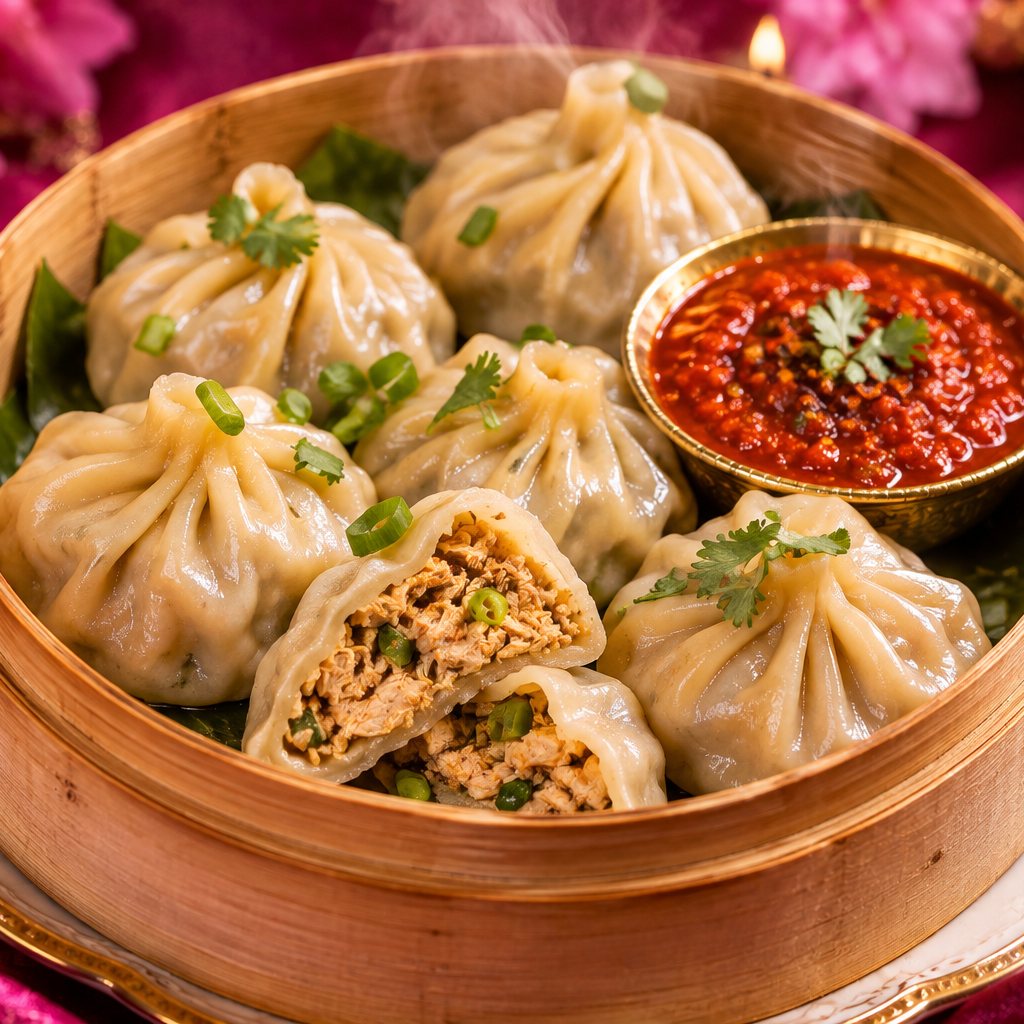
Juicy steamed chicken (or turkey) momos: a seasoned minced filling, a soft maida dough rolled into thin discs, pleated, sealed and steamed, with a fiery tomato-chili momo chutney. Instant Pot steaming option and the food science behind every step.
Your Instant Pot works as a large steamer. This method uses steam without pressure, so the thin wrappers don’t turn soggy.
Why not pressure cook? Momo wrappers are thin, and pressure steaming tends to make them gummy and can burst the seams.
How much to make, based on 4 people eating it once a day. One batch of this recipe makes About 24 momos (4 servings).
Why only a few days in the fridge? Refrigeration slows bacteria but doesn’t stop them; some, like Listeria, can still grow at fridge temperatures, which is why food-safety agencies set cooked leftovers at 3–4 days. Freezing at 0°F stops growth completely, so frozen portions stay safe indefinitely; the freezer times above are for best taste and texture.
Food-safety guidance: USDA, Leftovers and Food Safety · FoodSafety.gov storage chart